
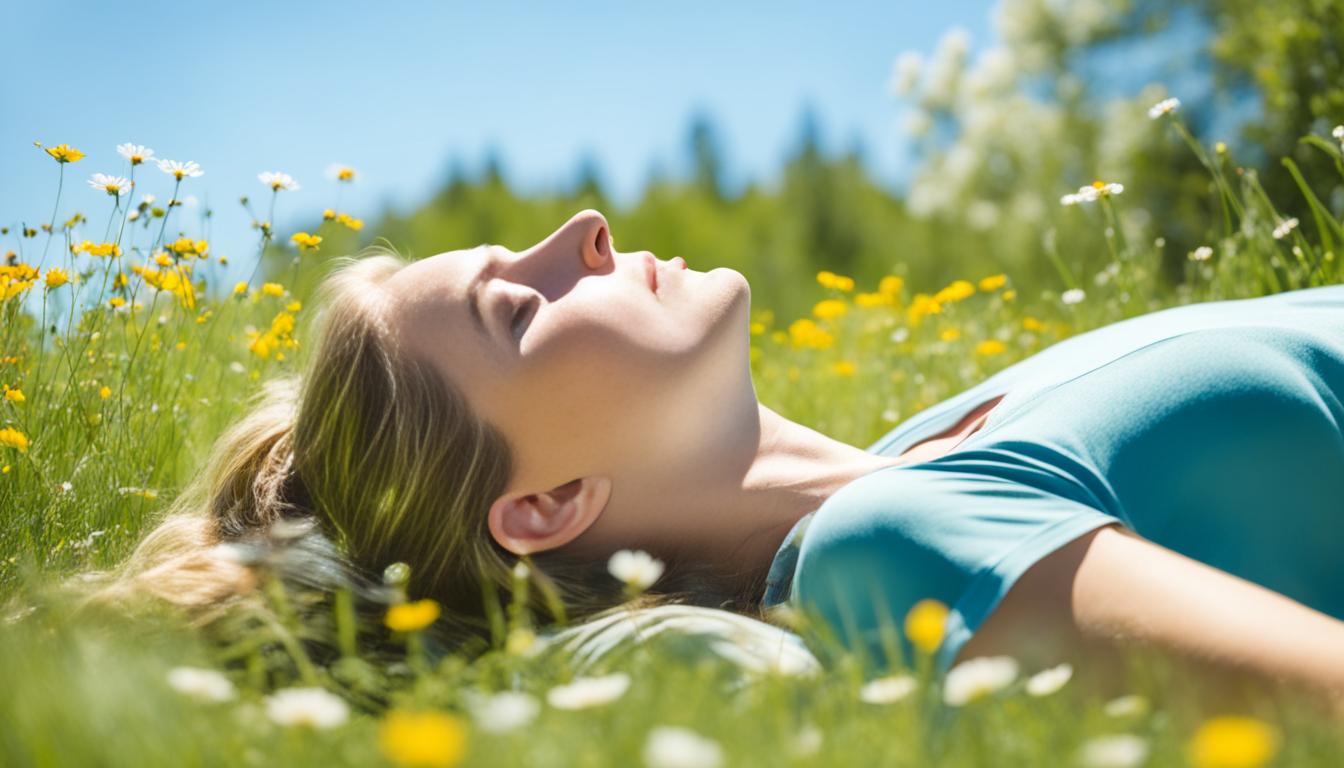
Welcome to our guide on relaxation techniques for stress relief. Today, stress is a big part of our fast life. But, it’s key to reduce stress for our health.
Relaxation methods calm your mind and body. They make you feel more balanced. Adding them to your daily life can lower stress and improve your health.
Key Takeaways:
- Discover effective strategies to reduce stress and promote overall well-being
- Understand the importance of relaxation for managing stress
- Explore deep breathing exercises, progressive muscle relaxation, guided imagery, and visualization techniques
- Learn about mindfulness meditation, yoga, and stretching for relaxation
- Discover the benefits of aromatherapy, music therapy, journaling, and expressive writing
Understanding the Importance of Relaxation
Let’s first understand why relaxing is important for handling stress. Relaxation isn’t just a treat. It’s a key part of staying healthy, both mentally and physically. It’s vital for our well-being.
When we unwind, our body lets go of tension. We make less stress hormones and feel calmer. Our body shifts from stress to a peaceful state. This change helps us in many ways.
Relaxing lowers blood pressure, betters sleep, boosts the immune system, and cheers us up.
If we make relaxation a daily habit, it fights anxiety and helps us focus better. It boosts our ability to handle stress. This way, we can refill our energy and face life calmly.
Scientific studies have proven that too much stress is bad for us. It can lead to serious health problems like heart disease, stomach issues, and depression. By making time to relax, we protect ourselves against these risks.
Also, relaxing makes us better at our jobs. It lets us pause, refresh, and come back with new ideas. We become more focused and creative in what we do.
Making time for relaxation is a way to care for ourselves, not selfish at all. It helps us keep a balance and feel more content. This shows how much we value and love ourselves.
Next, we’ll look at different ways to relax. These methods will help lower your stress, make you feel calm, and bring harmony to your mind and body.
Deep Breathing Exercises for Relaxation
Deep breathing exercises are both easy and effective. They let you breathe deeply and slowly. This brings calm to your mind and body, reducing tension.
Doing these exercises daily improves relaxation and well-being. It’s a great technique to learn.
The Benefits of Deep Breathing Exercises
Deep breathing offers many rewards for your health. It:
- Helps your body relax naturally
- Reduces feelings of anxiety and stress
- Lowers blood pressure and heart rate
- Increases lung function and oxygen intake
- Boosts mental focus and clarity
Now, we’ll look at some deep breathing methods to try.
1. Diaphragmatic Breathing
Diaphragmatic breathing uses the diaphragm to take in deep breaths. It’s also called belly breathing. This technique boosts your body’s calm response and gives you more oxygen.
“Breathe in deeply through your nose, letting your belly rise. Slowly breathe out through your mouth, your stomach falling. Do this several times, feeling more relaxed each time.”
Try diaphragmatic breathing for a few minutes daily to feel calmer.
2. 4-7-8 Breathing
The 4-7-8 breathing method is well-known for calming the mind. It focuses on slow and deep breaths.
“Shut your eyes and breathe in through your nose, counting to 4. Hold for 7 seconds. Breathe out slowly for 8 counts. Repeat, making each breath gentler and deeper.”
Use this technique before bed or when you are stressed to relax your mind.
3. Box Breathing
Box breathing, sometimes called square breathing, can make you feel balanced and peaceful. It involves equal-length breaths.
“Inhale through your nose for 4 seconds. Hold for 4. Breathe out through your mouth for 4. Hold for 4. Keep repeating, focusing on the steady rhythm.”
Box breathing is simple and can be done anywhere. It helps you find calm and focus.
Progressive Muscle Relaxation
Progressive muscle relaxation tempts our bodies into deep calm by tightening and then releasing muscles. This method lowers muscle tension and fosters serenity.
As you go through this technique, muscles are contracted then let go. This aids in becoming more sensitive to your body’s feelings. It also helps in releasing stress.
It’s based on the belief that a relaxed body leads to a calm mind. By tightening and relaxing muscles, we grow more aware of stress signals. We can then effectively diffuse these tensions.
For an effective session, pick a quiet spot. Begin by tightly tensing a muscle group, like your hands. After a few moments, let them gently loosen. Carry this feeling of easiness through all areas of your body.
Benefits of Progressive Muscle Relaxation
This relaxation technique is great for both body and mind. It does wonders:
1. Stress Reduction: It helps release tension, making it a top stress management method.
2. Promotes Relaxation: It induces a deep relaxation and calmness.
3. Improves Sleep: Doing this before bed improves sleep quality.
4. Enhances Body Awareness: It boosts our sensing of body tensions.

Try to do this daily. It’s good for de-stressing or for just feeling well. This method can be a key player in your relaxation and health strategy.
| Progressive Muscle Relaxation Steps | Instructions |
|---|---|
| 1. Start with your hands | Tense the muscles in your hands by making a fist. Hold the tension for a few seconds, then release and allow your hands to relax completely. |
| 2. Move to your arms | Tense the muscles in your forearms by flexing them. Hold the tension, then release and feel the tension melt away. |
| 3. Progress to your shoulders | Shrug your shoulders up towards your ears, feeling the tension in your neck and shoulders. Release the tension and let your shoulders drop down. |
| 4. Relax your face | Squeeze your eyes shut tightly and then release. Allow your facial muscles to relax, letting go of any tension in your forehead and jaw. |
| 5. Move down to your legs | Tense the muscles in your thighs by pressing your legs together. Hold the tension, then release and let your legs feel heavy and relaxed. |
| 6. Finally, your feet | Curl your toes tightly, feeling the tension in your feet. Release and let your feet completely relax, spreading your toes apart. |
Guided Imagery and Visualization
Guided imagery and visualization help us use our imagination’s power. They create calming images and stories. These can lower stress, improve focus, and help relax us.
How Guided Imagery Works
Guided imagery uses words or recordings to take us on mental journeys. These journeys make us feel good inside. They use our senses to create a peaceful feeling, reducing stress.
“Close your eyes and imagine yourself in a peaceful meadow, surrounded by a gentle breeze and vibrant flowers.”
We’re asked to imagine bright details during guided imagery. Such as the sounds, sights, and smells of a beautiful place. This helps switch off from troubles outside and bring peace.
Benefits of Guided Imagery
It offers many health benefits. These include who promote relaxation and lower stress. It can improve your mood, focus, self-confidence, and overall happiness.
By using guided imagery regularly, we can change our thinking for the better. We feel more calm and enjoy life more.
How to Incorporate Guided Imagery into Your Routine
You can add guided imagery to your days in several ways. Here are some ideas:
- Use apps or online recordings.
- Go to a class or workshop.
- Write your own scripts.
Always find a peaceful place and get comfortable. Then, close your eyes, breathe deeply, and let the imagery take you to a calm place.
Let guided imagery lead you to deep relaxation. Enjoy the peaceful images and release stress easily. Make this a part of your life, and feel its positive effects on your health.
| Benefits of Guided Imagery and Visualization | How to Practice Guided Imagery |
|---|---|
| Promotes relaxation | Use apps or online recordings. |
| Reduces stress | Go to a workshop or class. |
| Enhances focus and attention | Create your own scripts. |
| Improves mood and emotional well-being | |
| Boosts self-confidence and self-esteem |
Mindfulness Meditation
Mindfulness meditation brings us to the now, creating deep relaxation and clarity. By focusing on the present, we watch our thoughts without judgment. This builds self-awareness and peace within.
There are many ways to boost our meditation, like focused attention meditation. Here, we concentrate on something specific, like our breath or a mantra. It helps keep our minds from drifting away.
Body scan meditation works differently. We start with our toes, moving awareness upward. This release tension, easing stress.
“Mindfulness meditation teaches us to embrace the present moment with acceptance and non-judgmental awareness. It offers us a sanctuary where we can find refuge from the busyness of our minds and experience deep relaxation.” – Jon Kabat-Zinn
Loving-kindness meditation is about sending love and goodwill to yourself and others. It deepens the sense of calm and connection.
Benefits of Mindfulness Meditation
Mindfulness practice boosts our well-being in many ways. It helps lessen stress, sharpens focus, and increases self-awareness and emotional strength. It brings calm, balance, and peace when made a part of our daily routine.
Practicing Mindfulness Meditation
Start in a quiet, comfy spot. Sit relaxed but straight, eyes closed. Focus on your breath. Feel each breath in and out, fully living in the moment.
Over time, your mind will wander. This is okay. When that happens, gently return your focus to your breath. Remember to be kind and patient with yourself as you learn mindfulness.
Mindfulness Meditation Techniques
| Technique | Description |
|---|---|
| Focused attention meditation | Directing your attention to a specific object, such as the breath or a mantra. |
| Body scan meditation | Systematically bringing awareness to different parts of the body to release tension and promote relaxation. |
| Loving-kindness meditation | Cultivating feelings of compassion, love, and goodwill towards yourself and others. |
Yoga and Stretching for Relaxation
Yoga and stretching are great for reducing physical stress. They boost relaxation. By adding certain poses and stretches to your day, you can cut down on stress and feel calmer.
Yoga Poses for Stress Reduction
Mountain Pose (Tadasana): Begin standing with feet apart on the floor. Feel the connection with the ground. Lengthen your spine and soften your shoulders. Breathe deeply. This pose helps to soothe your thoughts and loosen tight muscles, aiding in relaxation.
Child’s Pose (Balasana): Start by kneeling and sitting back on your feet. Bend forward and let your forehead touch the ground. You can stretch your arms out or relax them at your sides. This pose eases tension in your back and shoulders, helping you relax deeply.
Corpse Pose (Savasana): Lay on your back with legs straight and arms loose. Palms face up. Close your eyes. Breathe slowly and deeply. Savasana is about resting deeply, which refreshes your body and mind.
Stretching Exercises for Relaxation
Neck Rolls: Sit so your back is straight. Tilt your head towards a shoulder and start to roll it in circles. Do this on both sides. It eases neck and shoulder tightness and brings relaxation.
Forward Fold: Stand with feet apart. Bend at the waist, letting your upper body hang. This uses gravity to unwind your spine and legs.
Seated Spinal Twist: Sit with legs out in front. Bend your right knee and cross your right foot over the left knee. Put your left hand on your right knee and twist gently to the right. Then switch sides. This move reduces back stress and helps you relax.

Add these poses and stretches to your daily life. They will help you ease physical stress, feel more relaxed, and improve your well-being. Take time for yourself with these activities, and see how they can help you.
Aromatherapy for Relaxation
Adding aromatherapy to our days can really boost relaxation and happiness. It uses plant oils to calm and refresh our minds. It’s also a natural way to feel serene.
The Benefits of Aromatherapy
People have used aromatherapy for ages as a healing method. It’s not just about feeling relaxed. Inhaling and applying these oils can help your body and mind in many ways. For example:
- Promoting relaxation and stress relief: Certain essential oils can calm the nerves and lower anxiety. Lavender, chamomile, and ylang-ylang are great for this.
- Improving sleep quality: Oils like lavender and bergamot make you sleepy. They can make your night’s sleep deeper and better.
- Boosting mood and energy: Citrus fragrances, like lemon and orange, can make you feel happier and more energetic.
- Alleviating pain and inflammation: Some oils, like peppermint and eucalyptus, can reduce pain and swelling in your muscles.
To get the most out of aromatherapy, find pure essential oils from trusted brands. They should share where their oils come from and how they make them.
Incorporating Aromatherapy into Your Routine
Here are ways to add aromatherapy to your day:
- Aromatherapy diffusers: Use a diffuser to spread the oils in the air. This lets you enjoy aromatherapy all around your home or office.
- Topical application: Mix oils with a carrier oil and put them on your skin during massages or when caring for yourself.
- Bath time: Put a few drops of oil in your bath or shower for a great and soothing time.
- Aromatherapy accessories: Use inhalers, roll-ons, or candles for aromatherapy at different times in your day.
Popular Essential Oils for Relaxation
Here are some of the top essential oils for calming down:
| Essential Oil | Aroma | Relaxation Benefits |
|---|---|---|
| Lavender | Floral, herbaceous | Calming, fights anxiety and sleep problems |
| Chamomile | Floral, sweet | Helps with peace of mind, encourages relaxation |
| Bergamot | Citrusy, fresh | Lifts you up, eases stress and tightness |
| Ylang-Ylang | Floral, exotic | Brings peace and joyfulness |
Try different essential oils to see which smells make you feel relaxed. Always be careful, as some oils can irritate your skin.
Aromatherapy can turn your space into a calm and stress-free environment. Essential oils have many benefits. Give them a try and see how they improve your life.
Music Therapy for Relaxation
Music therapy is a proving strong for peace and relaxation. It deeply affects our emotions in a positive way. It helps us lower stress, feel calm, and make our lives more serene.
It’s all about using music to meet personal needs and improve well-being. This approach connects the joy of music with science to heal. Listening to or playing music both bring great relaxation benefits.
Music can work wonders on our wellbeing. It slows our hearts, deepens breaths, and relaxes muscles. Tuning into soothing music aligns our brainwaves for relaxation.
Effects of Music Therapy on Relaxation
The power of music to relax us is vast. Here’s how it helps:
- Stress Reduction: Music is amazing at reducing stress and anxiety. It helps us focus away from worry, easing daily pressures.
- Mood Enhancement: The right song can make us feel better. Choosing songs that make us happy leads to a more relaxed and content mood.
- Promotes Mind-Body Connection: Music links our mind and body. Engaging with music sharpens our senses and relaxes us.
- Emotional Release: It lets us feel and express deep emotions. Music is a healthy way to let out our feelings and find calm.
Choosing the right music is key to music therapy’s success. Pick songs that touch your heart and calm your mind. Soft music, classics, or nature sounds – whatever makes you feel at peace.
When you need to relax, remember music therapy. Let the melodies soothe you. They can take you to a peaceful place inside.
| Music Therapy for Relaxation | Benefits |
|---|---|
| Stress Reduction | Alleviates stress and anxiety |
| Mood Enhancement | Uplifts spirits and improves mood |
| Promotes Mind-Body Connection | Fosters a deeper connection between mind and body |
| Emotional Release | Elicits deep emotions and provides an outlet for expression |
Journaling and Expressive Writing
Looking for ways to chill? Try journaling and expressive writing. They’re great for sorting out your thoughts and feelings. You end up feeling more relaxed and clear-headed.
Journaling is like a brain dump in a diary. You write what’s on your mind, heart, and soul. It’s a judgement-free zone where you can figure out your feelings and see why you do what you do. It helps you know yourself better.
Expressive writing is even freer. You just write anything and everything. This lets you let out built-up emotions and see things from a new angle. It’s super good for de-stressing and chilling out.
Benefits of Journaling and Expressive Writing
There are heaps of good things that come from writing your heart out. For example, it can help:
- Emotional release: Getting your feelings on paper can lighten your mind’s load and cut stress.
- Clarity and self-reflection: It makes what you’re thinking clearer, helping you understand yourself more.
- Problem-solving: Tackling issues on paper can lead you to solutions, making life less stressful.
- Stress reduction: Writing freely can make you feel calmer and less stressed out.
- Improved mood: Focusing on the good stuff can really lift your spirits.
Adding writing to your relaxation time can really boost your mind and mood.
“Expressive writing is a powerful tool for self-discovery and emotional healing. It allows us to delve into the depths of our emotions and gain a clearer understanding of ourselves.” – Dr. Jane Richards
When you write, make sure you’re in a peaceful spot. Try to write regularly and get lost in your thoughts. This can be very rewarding.
There are no right or wrong ways to write. It’s about your journey, not anyone else’s. Feel free to write what’s in your heart. This can really help you feel more relaxed and at peace.
Creating a Relaxation Routine
Making a regular relaxation routine is crucial. It helps manage stress and supports your well-being. By taking time each day to chill out, you make self-care a top priority.
Personalized Relaxation Techniques
Everyone is different, so your relaxation plan should fit you. Try out many ways to relax. You might like deep breathing, muscle relaxation, or meditation. Mix and match to see what works best for you.
Scheduling Relaxation Time
Adding relaxation to your day needs planning. Find moments to relax, like in the morning or before bed. By picking special times, it becomes a steady part of your day.
Making Relaxation a Priority
Putting relaxation first is essential. Knowing it boosts your well-being helps. Treat this time as important as any other and avoid skipping it.
Creating a Relaxing Environment
Choose a peaceful spot at home for your relaxation. Add calming items like soft light or music. A serene space makes relaxing easier and more effective.
Staying Consistent
Being regular in your relaxation is crucial. Even a few minutes each day helps a lot. This makes relaxation just a normal part of every day, improving its benefits.
Adapting Your Routine
Be ready to adjust your relaxation as life changes. Try new things or shift when you relax. Updating your routine keeps it working for you.
By making a personal, steady, and flexible relaxation plan, you can fight stress and boost well-being. Start today to care for yourself and live a more peaceful life.
Conclusion
In conclusion, learning how to relax is key in our busy lives. Techniques like deep breathing, muscle relaxation, and meditation help lower stress. They also bring calmness and well-being. Using these methods daily greatly betters your health.
Start with deep breathing or meditating to feel more balanced. Adding these to your routines helps a lot. Keep in mind, relaxing is crucial, not just a nice extra, but a must for living well.
Make taking care of yourself your top goal. By including relaxation in your day, you’ll find it easier to handle stress. Focus on relaxing, and see how much better you feel and live.
FAQ
Why is relaxation important for managing stress?
Relaxing is key to handling stress. It cuts down on stress hormones and decreases blood pressure. It brings both our mind and body to a calm state. Plus, it helps us sleep better, focus more, and feel better overall.
What are deep breathing exercises?
Deep breathing is about slowly taking in breaths to help your body relax. You focus on breathing in deep through your nose and out through your mouth. This simple practice can lower stress, relieve anxiety, and make you feel more relaxed.
How does progressive muscle relaxation work?
This method has you tighten then relax different muscles. It helps let go of physical stress, making you deeply relaxed. You also become more aware of your body and feel better overall.
What is guided imagery and visualization?
Guided imagery is about picturing calming scenes in your mind. This helps relax you, lower stress, and increase your focus. It’s a great tool for finding peace.
How can mindfulness meditation help with relaxation?
Mindfulness is staying aware of the moment without judgment. It calms you down and clears your mind. This method lowers stress, makes you more self-aware, and boosts your well-being.
How does yoga and stretching promote relaxation?
Yoga and stretching relieve body tension and help you relax. The movements not only make you more flexible but also boost your blood flow. They reduce stress and quiet your mind. Doing them regularly leads to a more peaceful you.
What is aromatherapy?
Aromatherapy uses scents to aid in relaxation. You can smell, use on skin, or diffuse essential oils. Oils like lavender relax, citrus refreshes, and peppermint helps you focus.
How does music therapy aid relaxation?
Music therapy uses sounds to calm and destress us. Listening to relaxing music slows heart rate and lowers blood pressure. It also uplifts your mood and makes you feel peaceful.
How can journaling and expressive writing aid in relaxation?
Writing lets you work through your thoughts and feelings. This can ease stress and bring you clarity. It’s a great way to reflect on yourself and manage stress.
How do I create a relaxation routine?
To make a relaxation routine, pick techniques you like such as deep breathing or meditation. Set aside time each day for this. Keep trying different methods until you find what helps you relax best.