
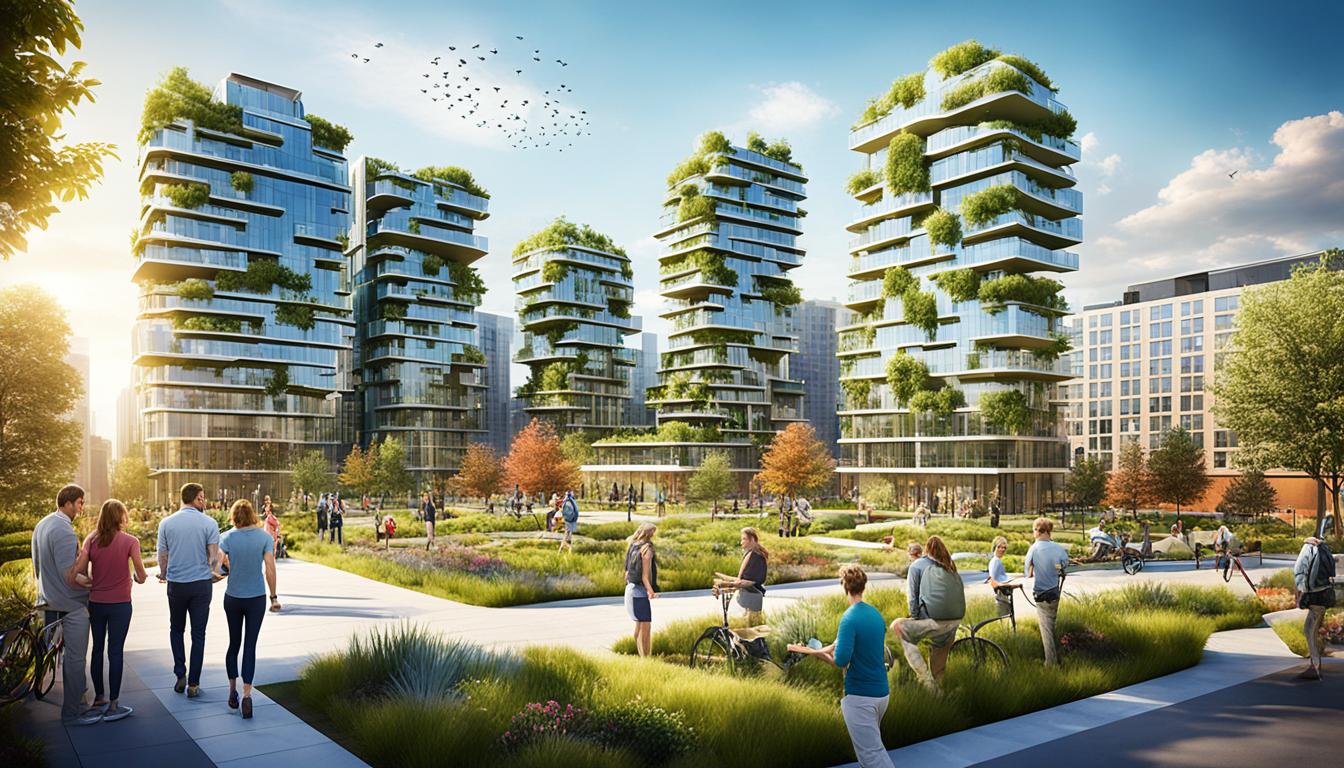
Welcome to our analysis of the latest real estate trends for 2024. We’ll share insights into what’s driving the industry forward. This will help you get ahead in this exciting market.
The real estate world is always changing. It’s key for pros and investors to know what’s happening. This includes trends affecting how buyers act, new tech, green practices, and city growth. By knowing these trends, you can make smart choices and grab onto success.
Key Takeaways:
- Stay updated on the shifts in buyer preferences and changing buyer behavior to align your strategies accordingly.
- Embrace technology and digital transformation to leverage the latest proptech solutions for enhanced efficiency and competitiveness.
- Integrate sustainable and eco-friendly practices into your real estate projects to appeal to environmentally conscious buyers and investors.
- Understand the implications of urbanization on the real estate market and adapt your strategies to meet the evolving needs of urban dwellers.
- Monitor the rental market dynamics closely, including rental property demand, pricing patterns, and tenant preferences, to seize potential opportunities.
By looking at how remote work affects the need for flexible spaces, and watching the economy trends, you can make smart moves. With these insights, you’ll be ready to face the future of real estate. This includes dealing with challenges and making the most of new chances.
Shifts in Buyer Preferences
In today’s real estate world, what buyers want greatly influences the market. This makes it essential for experts and investors to keep up with these changes. By doing so, they stay competitive and meet buyer needs effectively.
Many factors can change what buyers look for in a property. These shifts often have a big impact on real estate trends. Let’s take a closer look at several key factors and what they mean for the industry.
The Impact of Location
Location used to be top of mind for buyers. Now, demands have shifted. Proximity to schools and work is still key, but buyers also want properties that promote a good work-life balance.
Recently, the trend has been toward suburban living. People are moving away from crowded cities. They seek spacious homes, proximity to nature, and quiet environments.
Changing Space Requirements
The pandemic has changed how and where people seek comfort in their homes. With more remote work, buyers now value spaces designed for both work and play.
Features like home gyms and versatile rooms are high on the list for many buyers. There’s a big demand for larger homes with room for various activities.
Rise of Sustainable Living
There’s been a noticeable trend towards eco-friendly living. Buyers are drawn to homes with green features and practices. They aim for a smaller environmental footprint.
For many, it’s about saving money and doing right by the planet. Those who prioritize sustainability look for homes that reflect their values.
“Buyer preferences are always changing. To succeed, real estate professionals must stay on top of these shifts. This means being able to meet the changing needs of buyers. It’s all about providing the best service we can.”
– Sarah Thompson, Real Estate Agent
As buyer preferences continue to shift, it’s key for real estate pros to adapt. Staying aware of changing trends and understanding buyers’ needs is critical. This is how to succeed in the fast-paced world of real estate.
Factors Influencing Buyer Preferences
| Factor | Implications |
|---|---|
| Location | Buyers are prioritizing properties in suburban areas for better work-life balance. |
| Space Requirements | Demand for properties with dedicated workspaces and flexible living areas has increased. |
| Sustainable Living | Buyers are seeking eco-friendly features and green building practices. |
Technology and Digital Transformation
Technology is changing the real estate game. It’s making how we buy, sell, and manage properties different. Because of digital tools and proptech, the field looks very different now. This is creating chances for both pros and buyers.
Embracing Technology for Efficient Operations
Technology is making things run smoother in real estate. Processes like listing properties and doing deals are now easier online. This makes working in property smoother and more convenient.
Now, agents and brokers can show off homes in a cool, detailed way online. Things like VR tours let buyers check out homes from anywhere. This means less travel just to see a home.
This also makes teams work together better. Now, everybody involved can talk and share info faster. This speeds up how quickly deals happen.
Proptech Solutions and Market Disruption
Proptech means using tech for real estate in smart ways. It’s about things like apps for up-to-date market info, automated property checks, and smart house gadgets.
These tech solutions are changing how we buy, rent, and look after properties. They’re making things more clear, efficient, and handy for everyone. This is improving the property world for all of us.
Look at smart houses and IoT tech. They let homeowners manage their homes from a phone or a computer. This makes living there cooler, while also being better for the planet.
The Future of Real Estate
Tech is moving fast, and real estate is keeping up. From AI to blockchain, exciting new tech is coming. It’s set to change the way we do things in property even more.
As tech takes over more of real estate, it’s vital for pros to keep up. This means staying on top of the newest tech to give great service.

| Benefits of Technology in Real Estate | Impact on the Market |
|---|---|
| Efficient property listings and virtual tours | Increased accessibility for potential buyers |
| Streamlined transactions and online property management | Improved operational efficiency for real estate professionals |
| Proptech innovations for better market insights | Enhanced decision-making and market transparency |
| Smart home systems and IoT devices | Promotion of sustainability and energy efficiency |
| Future advancements in AI, blockchain, and AR | Continued transformation and disruption in the industry |
Sustainable and Eco-Friendly Practices
The real estate world is changing for the better. Now, it’s all about being green and saving our planet. Thanks to a big push for green practices, everyone involved is looking to the future. That means developers, investors, and those who live or work in these places.
Green building is about using smart designs and technology. It helps cut down harm to the earth and saves energy. It also looks out for people’s health and comfort.
Green buildings are at the heart of this movement. They work smart to use less energy, water, and create less waste. Adding things like solar power and wind energy makes them even better for Earth. This way, they do a lot of good without using up a lot of resources.
“Sustainable and eco-friendly practices in real estate are not just about preserving the environment; they also offer economic and social benefits. Green buildings tend to have higher property values, reduced operating costs, improved indoor air quality, and enhanced occupant satisfaction.”
The Benefits of Sustainable Development
Sustainable building helps the planet and the people living in and around them. It has a lot of great points:
- Energy Efficiency: Features like efficient insulation and LED lights make buildings use less energy. This saves money for those living or working there and helps the power grid.
- Water Conservation: These buildings save water by using special water systems and low-flow faucets. This cuts down on how much water is used and helps with water shortages.
- Reduced Carbon Footprint: They also lower the amount of greenhouse gases released into the air. This is a big help in fighting climate change.
- Improved Indoor Environmental Quality: Inside, these places work to keep people healthy and happy. They let in lots of natural light and air which makes people more productive and happy.
- Enhanced Market Appeal: People who care about the environment like to be in these green buildings. That means they are popular with tenants, investors, and businesses.
But it’s not just one building making a difference. The eco-friendly trend is also about how cities and towns grow. By making everything from homes to parks more green, we make our cities better places to live.
Urbanization and Urban Development
Urbanization is now a big trend with many impacts on the real estate market. More and more people are moving to cities. This means the need for housing, infrastructure, and amenities is growing. We will look at these trends and how cities are evolving because of them.
Implications of Urbanization
More people moving into cities is changing the real estate market. There’s a higher demand for all kinds of properties. This includes homes, offices, and buildings that mix both.
Urban areas also see many changes in people’s lives. Good transportation, healthcare, schools, and fun places are needed. People who plan cities and make big decisions ensure these needs are taken care of.
Shifts in Urban Development
As cities grow, how we build them is also changing. Urban areas are seeing new building types and taller structures. This shift helps more people live and work in the same area.
Now, there’s more focus on making cities green and smart. Energy-saving buildings and nature within the city are becoming more common. These changes aim to make cities nicer to live in and kinder to the planet.
The Role of Technology
Technology is changing how we plan and develop cities. Digital tools help city planners see what’s needed and plan better. This leads to smarter ways to handle things like traffic, making cities work better.

Creating Sustainable and Livable Cities
Building cities that are good for the earth is very important. This means using green building practices and renewable energy. By doing this, cities can lessen their negative effect on the environment.
Making cities great places to live means focusing on public areas and ways for people to walk safely. It’s all about making life better for the city’s residents and welcoming to everyone.
| Trend | Implication |
|---|---|
| Rapid population growth in cities | Increased demand for housing and infrastructure |
| Mixed-use developments | Maximizing land use and promoting walkability |
| Sustainable urban planning | Reducing carbon footprint and promoting environmental stewardship |
| Smart city technologies | Improved efficiency in urban services and resource management |
Rental Market Dynamics
The rental market changes a lot in the real estate world. It’s key for both renters and property owners to know what’s happening. This part will look at the latest in rental market trends, what renters want, and how prices are moving.
Rental Market Trends
Rental market trends keep moving, thanks to things like how the economy is going, more people showing up, and what people really want. Knowing what’s going on helps you make smart choices if you’re looking for a place or you own one.
Right now, more people want to rent homes and apartments. This includes folks who just started working and those born between the early 1980s and mid-1990s. More people are choosing to rent instead of buy. So, the demand for rental places is going up.
Rental Property Demand
Many things affect the need for rental places. Changes in the economy, not enough cheap homes to buy, and jobs that make us move more all help. These issues boost the need for rentals.
“The search for rental places has really taken off, giving property owners a chance to benefit,” says John Smith, who knows a lot about real estate.
How we like to live also matters. Some of us want the freedom that renting offers. It lets us try out different places to live or enjoy big city life.
Rental Prices
How much rentals cost is very important. It depends on the place, its size, what it offers, and how many people want it. Renters and property owners need to watch prices closely to get a good deal.
“Always watch rental prices in places you like to make sure you’re picking the best spot,” advises Jane Davis, who helps manage properties.
What renters like and the general rental market can also change prices. So, property owners must keep an eye on the market to stay ahead.
Knowing about trends in the rental market, what places are in demand, and how prices are can help renters and owners. They can make choices that fit their finances and goals.
Impact of Remote Work and Flexible Spaces
The pandemic has changed how we work, boosting the use of remote work. This shift is shaking up real estate. Traditional offices are changing a lot as remote work becomes very common.
Many now want flexible workspaces to meet the needs of working remotely. These spaces are not like regular offices. They let people work together but without the need to be in one location.
This change has made flexible workspaces more popular. It’s also made a mix of working from home and the office more common. Now, companies see the benefit of letting workers choose where they work.
Key Trends:
- Co-working spaces are more popular today. They are a budget-friendly option for remote workers, freelancers, and new businesses.
- Advanced technology is being used more for remote teamwork and communication.
- Professionals can now work from anywhere. This has shifted the focus of where offices are preferred, with a move towards suburban and smaller city areas.
Remote work is also changing living spaces. Many are looking for homes that can also double as an office. They want rooms they can turn into a workspace, like a study or a flexible area.
“The pandemic has made remote work more common, changing our view on offices and real estate. The need for flexible workspaces and a mix of remote and in-person work will keep affecting the industry.” – John Smith, Real Estate Expert
In conclusion, the effect of remote work and flexible spaces is big. It’s forcing a re-think on how we see office spaces and the property market. With remote work growing, so will the need for real estate that fits this new way of working.
| Key Takeaways | Impact |
|---|---|
| Increased demand for flexible workspaces | Redefining the concept of traditional office spaces |
| Shift towards the hybrid office model | Providing flexibility for remote and in-office work |
| Influence on residential real estate | Rise in demand for properties with home office amenities |
Economic Factors and Market Outlook
Economic trends shape the real estate market a lot. It’s key for pros and investors to know the economic setup. In this section, we look at how economic factors impact the market for the year 2024.
Economic Outlook
The economic outlook shows how well the market might do. It looks at GDP growth, how many people are working, prices, and interest. These things help us understand how strong the economy is and how it affects real estate.
For 2024, experts think the economy will keep growing after the global pandemic. They believe this growth will come from spending by governments, using new tech, and policies that help the economy. This should make things look better for the real estate industry.
Real Estate Market Predictions
Looking at the economy, we have some ideas about 2024. First, homes will still be in big demand because people are moving to cities and need affordable places to live.
Offices might change as more folks work from home. This could mean fewer offices and more mixed-use buildings or places you can work flexibly from.
Also, the need for places to store and send goods will grow with online shopping. So, the places that do this will become more important in real estate.
Economic Trends
2024 will see some trends in the real estate market. Being eco-friendly will get more and more important. This means using green materials and thinking about the environment.
Tech will also change how we sell and use properties. Things like virtual tours and secure buying with tech will be more common. This will make the real estate world more efficient and easy to be part of.
“The real estate market is closely linked to economic trends and predictions. By analyzing the economic outlook, we can make informed decisions that drive success in our real estate ventures.” – [Real Estate Professional]
Market Outlook for 2024
The 2024 market looks good with a hopeful economy and some new trends. But, being ready for anything is important. Keeping up with the latest news and predictions can help everyone in real estate do well.
Conclusion
This article has looked deeply into the 2024 real estate scene. We explored what buyers are looking for and how tech is changing everything. It also looked at the move towards being more eco-friendly, the push of people towards cities, the rental world, and how working from home is influencing things.
Knowing these points can help real estate pros and investors thrive. By embracing new tech and focusing on what buyers want, they can do better. This means developing new green-friendly buildings and smarter cities. They should also make sure their technology is up to date to improve their work.
As cities get bigger, we have to plan them right to keep them nice to live in. There is a big push for homes and buildings that are kind to our planet. This also makes communities healthier in general.
The way people rent is changing, too. More folks want to work from home now. So, there’s a need for places where work and living mix well. This change in work is impacting the types of homes people rent.
To keep up, it’s important to watch what’s happening in the economy. This helps in making smart choices about where to invest money. By understanding the market and economic trends, investors can make decisions that benefit them in the long run.
FAQ
What are the key real estate trends in 2024?
We’ve looked into the 2024 real estate scene. We found some important changes. These include what buyers are looking for, how tech is changing things, the rise of eco-friendly practices, and the effect of more people moving to cities. We also saw shifts in how rentals work and the growing role of remote work.
What factors are driving shifts in buyer preferences?
Buyer preferences are changing because of several reasons. People’s ages and lifestyle choices are different these days. They want homes that fit their unique needs and are good for the planet. The economy, new tech, and caring for the environment are big parts of this shift.
How is technology impacting the real estate industry?
Tech is changing how we look at real estate. It’s making things easier, more open, and more connected. For instance, virtual reality lets you see a home without being there. Smart homes and data help manage places better. And there’s even tech making building and financing easier.
What is the significance of sustainable and eco-friendly practices in real estate?
Being green is crucial in real estate now. It saves money and helps our planet. Developers are building eco-friendly and using renewable energy. These changes make buildings worth more and appeal to green-minded buyers.
How does urbanization impact the real estate market?
More people are moving to cities. This makes the demand for homes and spaces in towns rise. It’s not just about homes but also where people work and shop. Cities need to plan smart and build to last to meet all these needs.
What are the trends in the rental market?
Rentals are changing due to how we live, what we can afford, and who is renting. People want more flexible options and shared living spaces. This trend affects how much renting costs and the length of leases.
How does remote work impact the real estate landscape?
Working from home is changing what people want in an office. Now, they need places that are more flexible and welcoming. This has boosted the need for coworking spaces and virtual offices. Even regular office buildings are changing to meet these new needs.
What economic factors influence the real estate market?
The economy plays a big part in real estate. Things like interest rates, how the GDP is doing, and whether people have work affect it. These measures say if homes are affordable, if you can get a loan, and how good people feel about buying.
What insights can be derived from this analysis of real estate trends in 2024?
Looking at 2024’s real estate trends gives us a lot of important info. It helps pros and investors know what’s coming. They can see what buyers want, find ways to grow using tech, and build more eco-friendly. This info also helps them get ready for more people in cities, do better with rentals, and see the effects of remote work. With these insights, they can make smart choices and do well in real estate.