
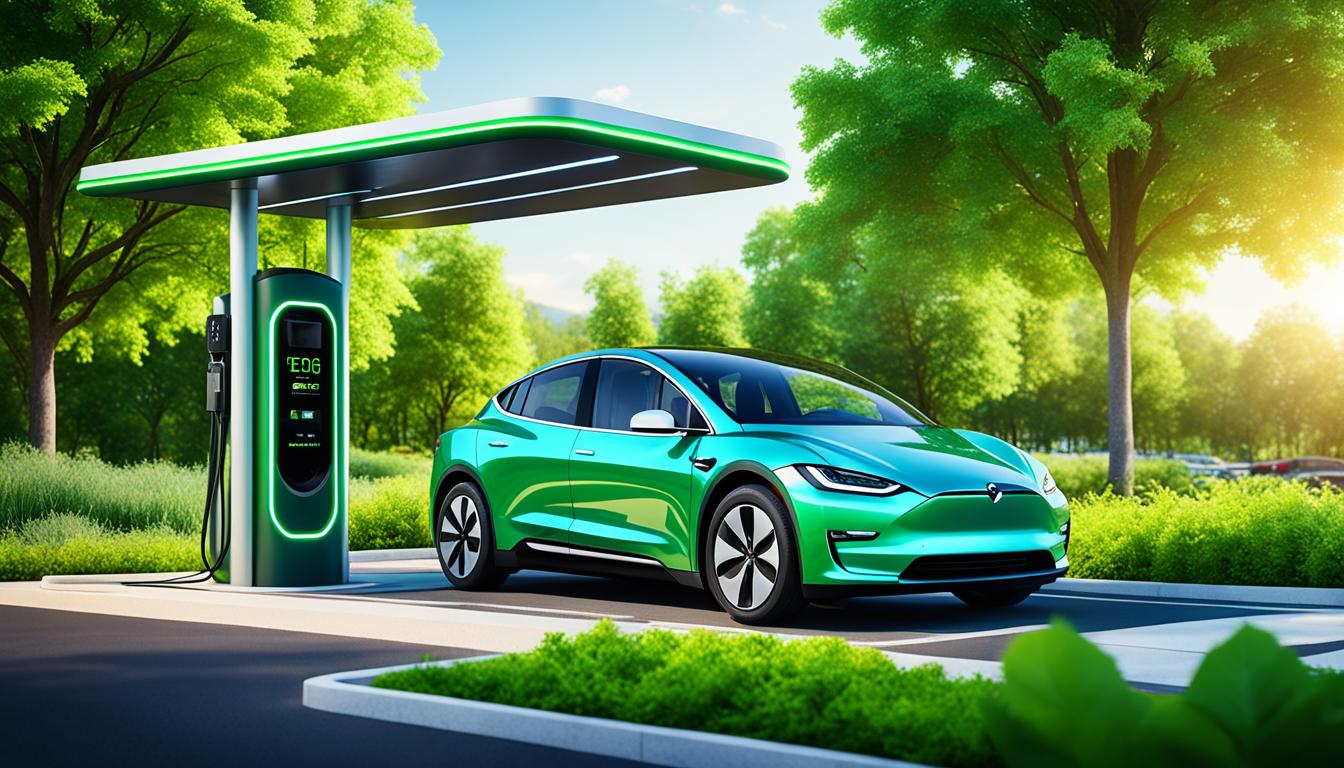
Welcome to our guide all about electric car charging stations. With more people choosing electric vehicles, a reliable charging system is key. This guide explores electric car charging stations. It aims to help you find the best charging option for your EV.
Key Takeaways
- Understanding the basics of electric car charging is essential before exploring different charging stations.
- Home charging stations offer convenience and cost-effectiveness, with various types to suit different needs.
- Public charging stations provide on-the-go power for EV owners away from home.
- Workplace charging stations play a crucial role in supporting electric vehicle adoption among employees.
- Networked charging stations offer convenience and accessibility through mobile apps and online platforms.
Understanding Electric Car Charging Basics
Before we dive into the many types of electric vehicle (EV) charging stations, let’s first understand the basics. Here, you will learn about the different charging levels, how long they take to charge, and what to think about when picking a charging solution for your EV.
Charging Levels
There are three levels of charging for electric cars. Each level has its own speed and amount of power it can provide:
- Level 1: It’s the slowest method and uses a regular home outlet at 120 volts. Even though it’s slow, it’s everywhere. It can charge your EV at 2-5 miles of range every hour.
- Level 2: These chargers run on 240 volts and are much faster than Level 1. You need a pro to install it. They can charge your EV at 10-60 miles of range in an hour, depending on the EV’s size and the charger’s power.
- Level 3 (DC Fast Charging): The fastest option is Level 3, also called DC fast charging. It uses direct current to give your EV a big power boost. You usually find these chargers on highways. In just 30 minutes, they can give your EV 60-80% battery power.
Charging Times
Charging an electric car takes different amounts of time based on the level, battery size, and initial charge level. Level 1 is slowest, Level 2 is quicker, and Level 3 is the fastest. Here’s a general idea of how long it takes to charge from empty:
| Charging Level | Approximate Time for Full Charge |
|---|---|
| Level 1 | 8-20 hours |
| Level 2 | 4-10 hours |
| Level 3 (DC Fast Charging) | 30 minutes to 1 hour |
Key Considerations
When you’re picking a charging solution, there are important things to think about:
- Charging Speed: Look at how you drive daily. Decide what speed of charging you need. If you go on long drives a lot, Level 3 might be best.
- Availability: Check how many charging spots are near you, at work, and if you can access Level 2 chargers easily.
- Compatibility: Make sure your EV can use the charger you want to use. Different cars have different plugs.
- Cost: Think about the setup cost, electricity costs, and any fees for using public chargers.
- Future-Proofing: Keep in mind that new charging technologies might come up. Think about if you can upgrade in the future.
Now that you know the basics, you’re ready to look at the different charging stations out there for electric cars.
Home Charging Stations: Convenient and Cost-Effective
Electric car owners often choose home charging stations. They are convenient and save money, making them a great option for daily use. Let’s discuss the various home charging stations, including installation, cost, and what you need for charging at home.
The Benefits of Home Charging Stations
A home charging station means charging your car at your convenience. You won’t need to always use public stations, which can save you time. This ensures your car is ready when you need it.
Charging your car at home is cheaper. You can use off-peak times to reduce costs. This is a big win for your wallet over time.
Types of Home Charging Stations
Home chargers come in Level 1 and Level 2 types.
Level 1 chargers are basic and come with your car. They use a standard 120-volt outlet. But, they are slower than Level 2 chargers.
Level 2 chargers are faster. You need a 240-volt circuit for them. They cost more but save time.
Installation and Cost Considerations
Installing a station requires meeting electrical and safety needs. Always use a professional electrician. They will make sure everything is safe and up to code.
The costs vary. Level 1 chargers are cheaper to install. Level 2 chargers may need more work and cost more upfront. Think about what fits your budget and needs.
Charging Infrastructure Requirements
To set up a station at home, you need a nearby parking spot with an electrical source. If you don’t have a proper outlet, an electrician can set it up. Ensure the power supply matches the station’s needs and the area is safe for charging.
Comparison of Home Charging Stations
| Charger Type | Charging Speed | Installation Requirements | Cost |
|---|---|---|---|
| Level 1 | Slow | Standard 120-volt outlet | Minimal |
| Level 2 | Faster | Dedicated 240-volt circuit | Higher upfront, potential electrical upgrades |
Table: Comparison of charging speed, installation requirements, and cost for Level 1 and Level 2 home charging stations.
Installing a station at home lets you charge anytime. Know about different chargers and their costs. Make sure your home’s electrical system is ready. This helps you pick what’s best for you and your budget.
Public Charging Stations: On-the-Go Power
Public charging stations are crucial for electric vehicle (EV) owners. They offer convenience and flexibility for charging outside of home or work. The number and types of these stations have grown, making it easy to charge your EV everywhere you go.
Public charging stations include Level 2 and Level 3 (DC fast charging). Level 2 chargers, often in parking lots and shopping centers, use a 240-volt power. They charge faster than home outlets and are great for longer stops.
Level 3 chargers, or DC fast chargers, are the quickest. They use high-powered DC electricity for fast charges. Mostly placed along highways, these chargers cut down on charge times, yet they can be pricier and less common than Level 2.
Station availability depends on the local area. You can find them through maps or EV charging networks. Some places even offer free or reduced charging to boost EV use.
Be ready for costs and how to pay at charging stations. Some need mobile apps, credit cards, or special cards. Charging prices might be higher at busy times. Knowing this and planning your charges will save money and time.
Wherever you travel, public stations allow charging without home access. An increase in these stations and better technology is making owning an EV more practical. It’s improving the way we charge electric vehicles, making it easier for all.
| Type of Charging Station | Power Supply | Charging Speed | Availability | Considerations |
|---|---|---|---|---|
| Level 2 | 240V AC | Fast charging compared to home charging | Commonly found in public areas | Longer stops, ideal for shopping or dining |
| Level 3 (DC fast charging) | High-powered DC current | Rapid charging | Usually along major highways | Expensive, suitable for long-distance travel or quick top-ups |
Using these stations lets EV owners charge on the move. Make sure you’re prepared with the right cards and knowledge. With more stations available, powering your EV is getting easier.
Workplace Charging: Charging Solutions for Businesses
Creating a green workplace includes setting up charging spots for electric cars. This meets the rising desire for electric cars. It brings perks for both companies and their team.
The Benefits of Workplace Charging
Charging at the office helps businesses act on their eco-plans. It’s a big plus in cutting carbon footprints. Let’s check out the good sides of this move:
- Having charge points boosts job satisfaction and keeps employees happy. It signals the business cares about green choices. Plus, workers with electric cars can top up while they work, saving them the hunt for stations.
- It makes a company more tempting for the crowd who care about the planet. Skilled pros picking their next gig like to see green efforts.
- Employees will spend less on fuel to get to work. Charging is cheaper than gas. Plus, firms get to save money through tax breaks when they help with electric car charging spots.
- This action paints a positive picture of the company. It highlights its green promises and positions it as an eco-leader.
Charging Solutions for Businesses
Businesses can pick from various charging setups. Speed, cost, and how it’s set up differ. Here are some options:
- Level 1 Charging: It’s basic and low-cost. Using a regular wall plug, this gives 3-5 miles of charge per hour. Great for short work stints, it fits into regular parking spots easily.
- Level 2 Charging: A step up from Level 1, it juices up cars quicker. It needs a special 240-volt setup. This choice suits employees working longer hours, needing a faster reload.
- DC Fast Charging: The quickest, Level 3 charges to 80% in 30 minutes. Found in busy spots, it uses a 480-volt system. Ideal for places where many drive electric cars, although more pricey to set up.
When picking a charging setup, look at how your team commutes. Count the e-cars you have and the power available. Chat with a charging pro to find the best fit for your business.
Tips for Implementing Workplace Charging Programs
For a smooth charging plan, consider these tips:
“Step by step, grow your charging setup. Start with a few spots, then add more as folks request them. Survey the team to match what you offer with what they need.”
“Spread the word and teach your team about e-cars and charging spots. Clearing up any wrong ideas helps get more people on board.”
“Think about prizes to push for more electric cars and use of the charging spots. Things like better parking, cheaper charges, or e-car incentives can encourage more use.”
With these moves, businesses can set up charging spots that help their green goals and please their team.

Networked Charging Stations: Convenience and Accessibility
Networked charging stations have changed how EV owners charge their cars. They make finding a charging station easy through apps or websites. We will look at the benefits of these stations, the important companies, and how to use different networks.
Advantages of Networked Charging Stations
These stations make life easier for EV drivers in many ways:
- Seamless Charging Experience: It’s simple to locate, check station availability, and even reserve a spot ahead of time. This is all thanks to apps and websites.
- Real-Time Status Updates: Users can see if a station is free before they arrive. There’s no need to journey to a full station, which can be frustrating.
- Payment Convenience: You can pay for your charge right from the app or website at many stations. This saves you from carrying around different payment methods.
- Data and Analytics: Operators use data from these platforms to make charging more efficient. This means more reliable access to charging for users.
Key Players in the Networked Charging Industry
Several companies are shaping the future of networked charging. Some big names are:
- Tesla Supercharger Network: Tesla leads with extensive fast-charging stations solely for their cars.
- ChargePoint: They have a vast network across North America and Europe. ChargePoint aims to make charging easier for everyone.
- EVgo: Known for their fast chargers, EVgo places stations in cities and along roads. They accept various payment methods.
- Electrify America: Focusing on a nationwide network, they work to increase charging availability. Their goal is to help more people switch to electric cars.
Navigating Different Charging Networks
Understanding each network’s features is key. When choosing a network, consider these:
Membership and Payment: Check if you need to join or if they offer a pay-as-you-go option. Look into costs and fees.
Charging Speed and Compatibility: Make sure the network’s charging speed and plug match your car’s needs.
Accessibility and Coverage: Think about whether the network has stations where you travel often. This includes both city and rural spots.
Additional Services: Some networks provide extra benefits like Wi-Fi or lounges. Choose what matters most to you.
Knowing how to navigate networks helps users make the most of their EV experience. It ensures they find charging stations wherever they go.
| Networked Charging Station Providers | Key Features |
|---|---|
| Tesla Supercharger Network | Exclusive high-speed charging for Tesla vehicles |
| ChargePoint | Extensive network of public charging stations and integrated payment system |
| EVgo | Fast-charging stations in urban areas and along highways, interoperable network |
| Electrify America | Expanding nationwide charging infrastructure and support for EV adoption |
Charging Station Installation and Maintenance
Installing charging stations is important for electric vehicle (EV) growth. It ensures they work right. Maintenance keeps them running well
First, we’ll talk about setting up stations. We’ll also cover permits, electrical needs, and caring for the stations.
Installation Process
Setting up a charging station needs careful steps. This includes checking the site and doing electrical work. A good site has enough power and space.
Elecetric work is next. This makes sure the stations have power. It’s done by pros who follow the rules. They make sure it’s safe.
Finally, the charging stuff gets set up. This includes stations and cables. It must be done just like the maker says.
Permit Requirements
Getting permits is part of installing stations. It’s needed to follow local rules. Permits cover electrical and location safety and quality checks.
This might need electrical permits and checks. It also checks if the station fits local laws. Inspections make sure it’s all done right.
Electrical Considerations
Charging stations need the right electrical setup. Power supply and use must be calculated. Sometimes, the place’s electrical system needs upgrading.
The power must match what the stations need. This might need changes to the building’s power setup.
Calculating the load is key. This checks the electrical system can handle the new stations.
Best Practices for Maintenance
Stations must be looked after to last and work well. Cleaning, checks, and updates help. This means less chance of problems for EV drivers.
Regular checks spot problems early. These could be bad cables or broken parts.
Cleaning stops things from malfunctioning. Use products that won’t harm the stations.
Updates keep things running well. They help with performance and security problems.
| Benefits of Charging Station Maintenance | Charging Station Maintenance Tasks |
|---|---|
| 1. Maximizes charging station uptime | 1. Regular inspections and maintenance |
| 2. Avoids costly repairs | 2. Cleaning charging stations and connectors |
| 3. Ensures user satisfaction | 3. Software updates and bug fixes |
| 4. Extends the lifespan of charging stations | 4. Addressing repairs promptly |
By keeping up with these methods, charging station owners make sure they work well for EV users.

Future of Electric Car Charging Stations
The future of charging stations for electric cars is looking bright. With more and more people choosing electric vehicles, we’re seeing great advancements in how we charge them. This is making it easier and more efficient to keep our cars powered up.
Wireless Charging
Wireless charging is a key technology in electric car charging’s future. It does away with the need for cables. Instead, cars can charge by just parking over a special pad. This makes charging simple and convenient for owners.
Bidirectional Charging
Another exciting development is bidirectional charging. This lets electric vehicles not just take in power but also give it back. This is useful for energy storage and balancing the power grid. It’s part of what’s called vehicle-to-grid (V2G) technology.
Advancements in Charging Infrastructure
Charging stations are also improving fast. We’ll see more stations that can quickly charge cars, letting them travel longer. This growth will make it easier for electric car owners to go on long trips without worrying about power.
| Advantages of Future Charging Stations | Key Challenges |
|---|---|
| 1. Faster charging times | 1. Upgrading the existing electrical grid |
| 2. Increased charging station availability | 2. Balancing the demand on the electrical grid |
| 3. Improved charging infrastructure reliability | 3. Standardization of charging protocols |
| 4. Integration with renewable energy sources | 4. Ensuring interoperability between different vehicles and charging stations |
The future of electric car charging is very promising but also comes with its challenges. We need to work on upgrading the grid, balancing its demand, and making sure all cars can use any charging station. These are important steps for the future of electric cars.
With technology getting better and more people choosing electric, the future is very bright for charging stations. As wireless and bidirectional charging grow, and more stations are built, using electric cars will get more practical and convenient every day.
Charging your electric car will become easy and efficient very soon. Whether you’re at home, at work, or in a public place, charging will be a smooth experience. More people driving electric cars means more charging stations. This is the path to a future powered by sustainable and electric transport.
Conclusion
Understanding electric car charging stations is key for a smooth ride with your electric vehicle. You can pick a charging station for home, use public ones, or charge at work. The good news is that finding a place to charge is getting easier. This makes owning an electric car more practical and convenient.
FAQ
What are electric car charging stations?
These are places where electric cars can get energy. They are also called EV charging stations. People use them to power up their electric cars and hybrids.
How does an electric car charging station work?
At a station, you connect the car to get energy. This charges the car’s battery. You unlock the power you need to keep driving.
What are the different types of electric car charging stations?
Electric car stations come in three levels. You have Level 1, Level 2, and Level 3. Each one is for different cars and charges at different speeds.
How long does it take to charge an electric car at a charging station?
It varies, but quick charging needs about 30 minutes. A full recharge for most electric cars takes 4 to 8 hours. Slower options can take overnight.
Are there charging stations for electric cars at home?
Yes, you can have one at your home. They make it easy to power up your car at night or when it’s not in use. It’s a great way to save time and money.
Can I use a public charging station for my electric car?
Yes, you can. It’s easy to find them in places like parking lots and near shopping areas. They help you keep moving while your car powers up.
What is workplace charging?
It’s when your work has a place to charge your car. It lets you power up while working. This is great if you can’t charge at home.
What are networked charging stations?
These stations are linked together. You can find them with an app, and some let you pay online. It makes charging your car smooth and simple.
What is involved in charging station installation and maintenance?
Setting up a station requires electric work and following rules. Afterwards, it needs checks and cleaning often. This keeps everything working right.
What does the future of electric car charging stations look like?
Electric car charging is getting better all the time. Soon, you might not even need a wire to charge. There is a lot of growth and improvement happening for electric vehicles.