
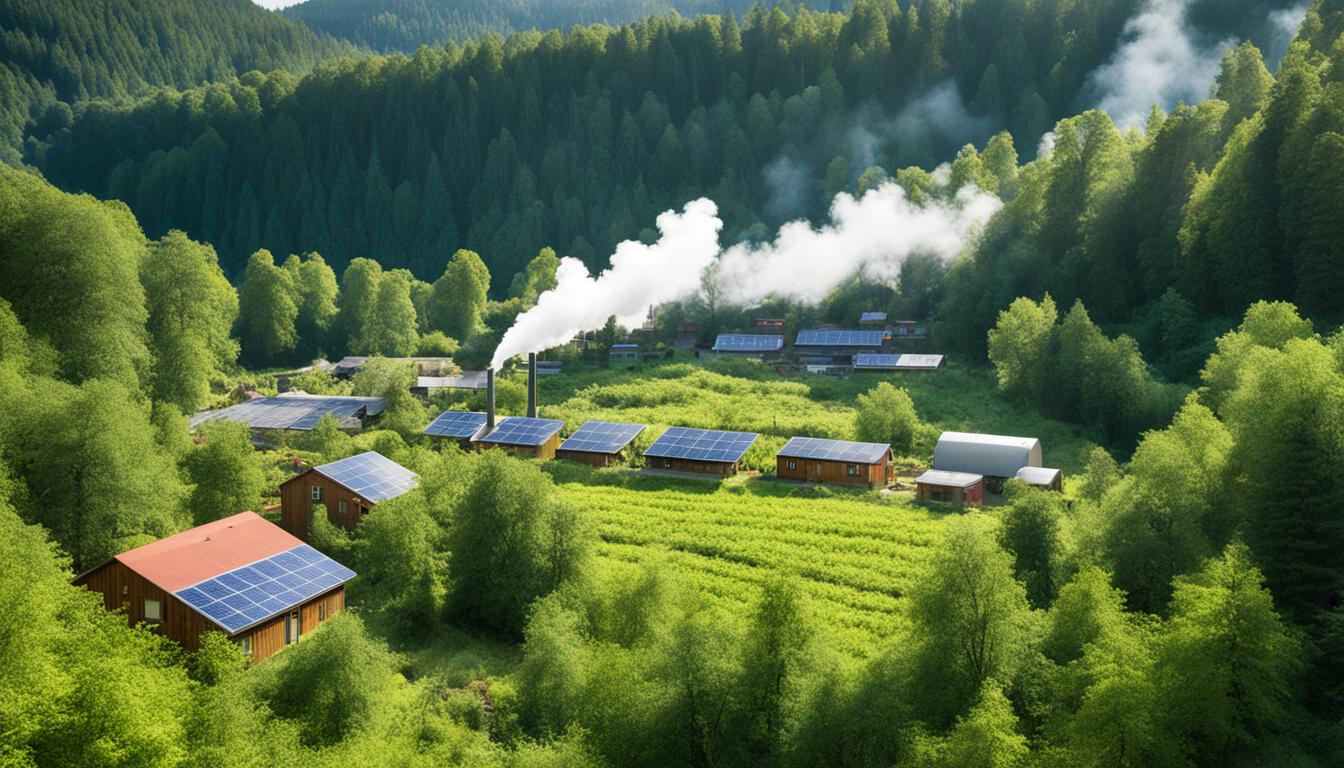
Welcome to our article on green living and its role in a sustainable future. It’s essential to make choices that are friendly to our world. These choices help future generations by preserving our environment.
Green living means doing things to cut down waste and save resources. We should choose to do things that are kind to the Earth in our everyday lives. For example, we can use less power and buy from companies that care about the planet.
In this article, we’ll look at why going green is great. We’ll learn how important it is to have sustainable habits. Plus, find out some easy ways to be more eco-friendly every day. Let’s start this journey toward making our world a better place together.
What is Green Living?
Green living is a set of principles aiming to lower our environmental impact. It looks to make our future more sustainable. This involves cutting down waste, saving resources, and choosing green options daily.
At its heart, green living is all about choosing what’s best for our planet and those who come after us. It helps save natural resources, decrease pollution, and builds a healthier world for everyone.
It focusses on sustaining our needs now without harming what the future needs. It ties together environmental, social, and economic impacts in the choices we make.
Principles of Green Living
Green living has core principles we can explore:
- Reduce Waste: It asks us to lessen waste by recycling, reusing, and finding new uses for things. Doing this cuts down on landfill waste and saves resources.
- Conserve Resources: Green living means saving resources like water, energy, and materials. Using energy-efficient products and cutting back on water helps our planet.
- Make Sustainable Choices: It pushes us to pick green options in how we move, eat, dress, and use products. This could be choosing eco-friendly cars, supporting green farming, and buying items made responsibly.
- Embrace Renewable Energy: It supports using renewable energy at home and work. This includes solar, wind, and geothermal power, cutting our need for harmful fossil fuels.
Following these green living principles can better our world, economy, and health. Small changes in how we live can lead to a big, positive impact on a sustainable future.
“The greatest threat to our planet is the belief that someone else will save it.” – Robert Swan
Benefits of Green Living
Choosing a green lifestyle has many perks that go beyond just you. It helps the whole planet. Making green choices boosts our health and saves money. It also helps ensure a better future for everyone.
Improved Personal Health and Well-being
Eating organic food keeps us away from harmful chemicals. It’s good for our bodies. Doing activities like biking and walking is also great. They make our hearts stronger and keep us fit.
Financial Savings
Going green can lighten your financial load. Using less energy and water means lower utility bills. Adding energy-efficient appliances and more natural light at home helps. It can save a lot of money. Using cars less, like carpooling or taking public transport, also means spending less on gas and cars.
Reduced Carbon Footprint
Lowering our carbon footprint is key to a green life. By picking renewable energy sources like solar and wind power, we use less fossil fuels. This reduces greenhouse gases. Saving water, making less trash, and recycling also help a lot.
Green living helps us and the planet in big ways. By choosing to be eco-friendly, we’re building a better future for all.
Living green leads to a more sustainable planet. It keeps us healthy, saves money, and lowers our negative impact. This is our way to a better, greener world. Let’s all keep moving forward on this important journey.
Understanding Sustainable Practices
Understanding sustainable practices is crucial for green living. We can make our future more eco-friendly by using them. These practices help us all live in a sustainable way for future generations.
Utilizing Renewable Energy Sources
Using renewable energy is a key practice. It includes the sun, wind, and water. This helps us use fewer fossil fuels and create less pollution. Solar panels, wind turbines, and hydroelectric power are great ways to do this.
Adopting Organic Farming Methods
Farming organically is another important practice. It doesn’t use harmful chemicals, so it keeps the soil healthy. This way, we can have more diverse plants and safe food. Supporting local organic farmers or growing your own food helps.
Implementing Water Conservation Strategies
Conserving water is also important. We should use water wisely. Things like taking short showers and fixing leaks help. This way, we keep water safe and use it well.
Reducing Waste through Recycling and Composting
Reducing waste is key. Recycling materials like paper, plastic, and glass saves resources. Also, composting helps to recycle food waste into soil. It’s good for gardening and cuts down on waste.
Promoting Sustainable Transportation
Using green ways to travel is very important too. Choose to walk, bike, or take the bus. This reduces pollution from cars. Small travel choices can help the environment a lot.
Investing in Energy-Efficient Appliances
Buying energy-efficient appliances is smart. They save energy and money. Look for the ENERGY STAR label when you shop for appliances. They are the most efficient.
Supporting Ethical and Sustainable Businesses
Buying from ethical companies is a good sustainable practice. Look for brands that care about the environment and treat people fairly. Your choices can make a difference in the kind of products that get made.
Summary
From using renewable energy to supporting green businesses, every effort counts. Making sustainable choices every day is how we can all help our planet. These practices lead to a future where the Earth is healthier.
Energy Efficiency: A Key Component of Green Living
Energy efficiency is crucial for green living. By using less energy and choosing greener options, we can help the planet. We also save money on our bills. This part will show you why energy efficiency matters and how to improve it at home.
One great way to save energy is by making sure your house is well insulated. Insulation keeps heat inside during winter. This lowers the need for lots of heating. It makes your home warm and eases pressure on your heating system. Adding insulation in your walls, attic, and basement is a smart move.
Using energy-saving appliances also helps. Search for the Energy Star label when you buy. These appliances use less energy but work well. You can find efficient refrigerators, washing machines, light bulbs, and more.
Simple habits can cut down on energy use too. Try to use natural light by keeping your curtains open. Turn your thermostat down when you’re not home. Also, remember to unplug devices when they’re idle to stop them from using power.
If you really want to cut your energy use, think about solar power. Solar panels on your roof can turn sunlight into electricity. Even though it costs more at first, it’s a good long-term option. Solar energy is both green and affordable.
Practical Tips for Energy Efficiency
Here are some practical tips for making your home more energy efficient:
- Replace old light bulbs with efficient LED or CFL bulbs.
- Use power strips to turn off several electronics at once easily.
- Fix gaps around windows, doors, and ducts to stop air from getting out.
- Get a programmable thermostat to control heating and cooling better.
- Pick appliances and gadgets that have the Energy Star label.
“Energy efficiency is not about making sacrifices, but rather making smarter choices that benefit both the environment and our wallets.”
By following these tips, you can use less energy and live in a greener home. Working together, we can lessen our impact on the planet. We can help build a more sustainable future.
Eco-Friendly Transportation Options
Your transportation choices matter a lot for the environment. Going for eco-friendly ways helps cut down harmful emissions. It also pushes us towards a greener future. Let’s check out the benefits of choosing these green ways.
Public Transportation: A Greener Commute
Public transport is a top eco-friendly choice. It eases traffic and lowers emissions. Travelling by bus, train, or tram is a win for the planet.
It’s usually cheaper and faster in cities. This saves time, money, and is kind to the environment.
Cycling: A Healthy and Sustainable Choice
Cycling is good for Earth and our well-being. It cuts down on carbon and is a sustainable way to move around.
Cycle commuting is also a workout. It reduces pollution, noise, and your need for gas. Plus, it’s fun and keeps you fit.
Get a good bike and take the lanes. It’s great for short runs or going to work. It’s a simple way to go green.
Carpooling: Sharing Rides for a Sustainable Future
Sharing rides helps cut down on cars and their pollution. It’s carpooling, where you travel with others heading to the same places.
It cuts fuel use and saves on gas and parking. It also builds a closer community. Ridesharing with people you know or meet is a plus.
Many apps help find carpooling mates. It’s an easy way to lower emissions and join in a sustainable way of life.
The image above represents the various eco-friendly transportation options available for green living.
Going green in transportation means taking public transport, biking, or sharing cars. It’s a step toward a sustainable world. It cuts emissions, boosts health, and connects us. Add these to your daily commute and help build a better future for all.
Sustainable Shopping and Consumption
Sustainable shopping makes a big difference in our world. It’s about thinking before we buy. We should choose items that are good for the planet and society. This means looking for eco-friendly goods and supporting responsible businesses.
When shopping, pick products with meaningful labels. These might say they’re organic, fair-trade, or cruelty-free. Such items are kinder to the earth and made with care for people. Choosing these brands helps the planet and others.
It’s essential to also shop from local and ethical sources. Buying from nearby places reduces pollution from shipping and helps our communities. Look for businesses that treat their workers well. This supports fair wages and human rights.
Benefits of Sustainable Shopping
Sustainable shopping is great for us and the world. It saves money by choosing quality products. These items are made to last longer. So, we throw away less and need to buy new stuff less often.
Supporting ethical and local businesses strengthens our communities. Our spending helps create jobs and supports development nearby. This makes our area a better place to live for everyone.
“Sustainable shopping is about more than eco-friendly choices. It’s building a brighter future for our planet and showing we care about the earth and each other.”
Tips for Sustainable Shopping
Here are easy ways to shop sustainably:
- Make a list and only buy what you need.
- Prefer products with little or recycled packaging.
- Buy fresh foods and handmade items to support locals.
- Try thrift shops for unique finds and less waste.
- Check companies to see if they share your green values.
| Benefits of Sustainable Shopping: | Examples |
|---|---|
| Reduced environmental impact | Choosing organic and fair-trade products |
| Financial savings | Purchasing durable products that last longer |
| Supporting local businesses | Shopping at farmers markets and small local stores |
| Creating a sense of community | Building relationships with local artisans and entrepreneurs |
Waste Reduction and Recycling
Green living and sustainability rely heavily on waste reduction and recycling. These actions are key to making a difference. By composting, reusing items, and cutting back on single-use plastics, we help secure a better tomorrow.
Composting: Turning Waste into Nutrient-Rich Soil
Composting is a great way to cut down on waste. It involves turning food scraps and yard trimmings into nutrient-rich soil. This soil can then be used in gardens. Using compost reduces the need for harmful fertilizers and helps the planet.
Reusing and Repurposing: Giving New Life to Everyday Items
Reusing and repurposing items is a powerful step in waste reduction. Extend the life of products like jars, bags, and clothes to prevent waste. Get creative by making old items new again, like turning furniture into something unique. This reduces what goes to landfills.
Minimizing Single-Use Plastics: Finding Sustainable Alternatives
Single-use plastics harm the environment a lot. To combat this, we should use less of them. Buy a reusable water bottle, swap plastic straws for metal or bamboo ones, and bring your own shopping bags. Doing so lowers our environmental impact and supports a green lifestyle.
When we reduce waste and recycle, we safeguard resources and the environment for the future.
Recycling Guidelines
| Material | Recyclable Items | Non-Recyclable Items |
|---|---|---|
| Glass | Jars, bottles | Broken glass, ceramics |
| Paper | Newspapers, cardboard, magazines | Tissues, paper towels |
| Plastic | Plastic bottles, containers | Plastic bags, styrofoam |
| Metal | Cans, aluminum foil | Paint cans, aerosol cans |

Recycling is a must for living green. Know what you can recycle to do it right. The table lists some dos and don’ts of recycling.
Let’s all do our part in waste reduction and recycling. It’s not hard, and it makes a big difference for the planet. Join us in this green mission.
Green Home Design and Eco-Friendly Living Spaces
Creating eco-friendly living spaces is key for green living. We do this by using green home design. This helps us lower our impact on the planet and support sustainability. We will talk about using energy-efficient appliances, sustainable building materials, and water-saving tips. These are all part of making our homes more eco-friendly.
Energy-Efficient Appliances
Picking energy-efficient appliances is important for a green home. Appliances with high Energy Star ratings are a good choice. They use less energy, which means lower bills and less harm to the environment. Look for fridges, washers, dishwashers, and AC units that save on electricity and water.
Sustainable Building Materials
Choosing the right building materials can make our homes greener. Look for things like bamboo floors, recycled wood, and glass. You might also find wool or cellulose insulation to be good options. These are not only better for the planet, but they’re also durable and look great. Don’t forget to use paints and glues that are low in VOCs. They help make the air inside your home cleaner.
Conserving Water Techniques
Water conservation is crucial for an eco-friendly home. There are many simple ways to use less water. Use fixtures like low-flow faucets and toilets to cut down on waste. Rainwater systems can save water for watering plants. Also, choose native plants for your yard that don’t need a lot of extra water.
“Green home design focuses on incorporating energy-efficient appliances, sustainable building materials, and water conservation techniques to create eco-friendly living spaces.”
Integrating energy-efficient appliances, sustainable materials, and water-saving methods make our homes better for the planet. Green home design helps us all live healthier. By making our homes greener, we move towards a better future. Let’s embrace these changes for a greener and more sustainable life.
Community Engagement for Green Living
Community engagement is key to promote green living and ensure a sustainable future. By joining local efforts and spreading the word on green habits, we make a big difference together.
Mobilizing for Change
Being part of the community gets the ball rolling for real change. It brings people together, sparks new ideas, and encourages everyone to work for a greener, better tomorrow.
“Community engagement is the backbone of sustainable development. It brings people together, encourages dialogue, and drives positive change.”– Jane Mitchell, Environmental Activist
We work better together when we connect with the neighbors, local groups, and the government. This helps us share ideas, combine efforts, and face big environmental problems like climate change and pollution as a united force.
The Power of Education
Education is a game-changer when it comes to making our planet greener. By teaching others and spreading the word about green practices, we inspire people to make earth-loving choices every day.
We use workshops, seminars, and community events to inform others about green living’s perks. Then, we give them the ways to start these eco-friendly practices in their own lives.
Supporting Local Initiatives
Communities can do a lot by backing causes that support green living locally. From helping in the garden to supporting energy projects, these actions combine for a bigger impact.
Local businesses and groups are also crucial for green community work. They help by selling green products and services, supporting a green local economy.
| Benefits of Community Engagement for Green Living | Examples of Community Engagement Initiatives |
|---|---|
| Strengthens social connections and fosters a sense of community | Collaborative clean-up drives |
| Increases awareness and knowledge about sustainable practices | Workshops on composting and recycling |
| Encourages collective problem-solving and innovation | Community-led renewable energy projects |
| Creates opportunities for skill-building and personal growth | Community gardens for sustainable food production |
By getting involved in community work, we not only make our area stronger and green, but we also encourage others to join in. Together, we keep our planet safe for the ones to come.

Let’s work as one towards a future that’s greener and better. With all of us working together, we can make a true, lasting change, and make our earth healthier.
Conclusion
Embracing green living is vital for the environment and our health. It means using sustainable ways in our daily lives. This makes the planet better and ensures a healthier future for all.
Small steps like cutting waste and saving energy matter a lot. They add up to big changes. We can all help, and every effort counts.
We welcome you to be part of this green journey with us. Let’s work towards a world where sustainability is key. Today, start making greener choices. Your actions can inspire many. Together, we will have a real and lasting effect.
FAQ
What is green living?
Green living is about making choices that reduce waste and save the Earth’s resources. It means living in a way that is kind to our planet. This lifestyle helps the environment and future generations while protecting the planet.
Why is green living important?
Green living is key to saving the environment and ensuring a better future. It lessens pollution and helps limit the effects of climate change. This way of life also improves health by choosing natural over harmful chemicals.
What are the benefits of green living?
Living green has many pluses. It boosts health, cuts costs, and leaves a smaller carbon footprint. It also aids future sustainability and brings people closer to nature.
What are sustainable practices?
Sustainable practices are ways to ensure the planet can meet our needs now and in the future. They involve using green energy, cutting waste, and supporting ethical businesses. With these habits, we can enjoy a healthy planet for many years.
Why is energy efficiency important in green living?
Being energy efficient helps save our planet’s resources and lowers harmful emissions. It means using appliances that don’t waste energy, improving home insulation, and choosing greener options. These steps lead to a more sustainable tomorrow.
What are eco-friendly transportation options?
Eco-friendly transport options lessen pollution and support a green planet. They include taking the bus, biking, carpooling, and using electric cars. These choices reduce air pollution and ease traffic problems.
What is sustainable shopping?
Sustainable shopping involves buying things that are kind to the planet and made the right way. It means picking eco-friendly, well-made items that support fair trade. This type of shopping helps protect the Earth and the people living on it.
How can I reduce waste and practice recycling?
To cut waste and recycle, start by properly sorting your trash. Compost food scraps, reuse items, and avoid single-use plastics. Join local recycling efforts to save resources and keep waste out of landfills.
What is green home design?
Green home design creates houses that are energy-savvy and eco-friendly. It includes using efficient appliances, eco materials, and designs that save water and energy. This approach makes homes that are good for people and the planet.
Why is community engagement important for green living?
Getting communities involved is vital to green living. By working together, we have a bigger impact. This includes joining green projects, teaching others about sustainability, and learning together. It builds a strong, caring community focused on a healthy planet.