
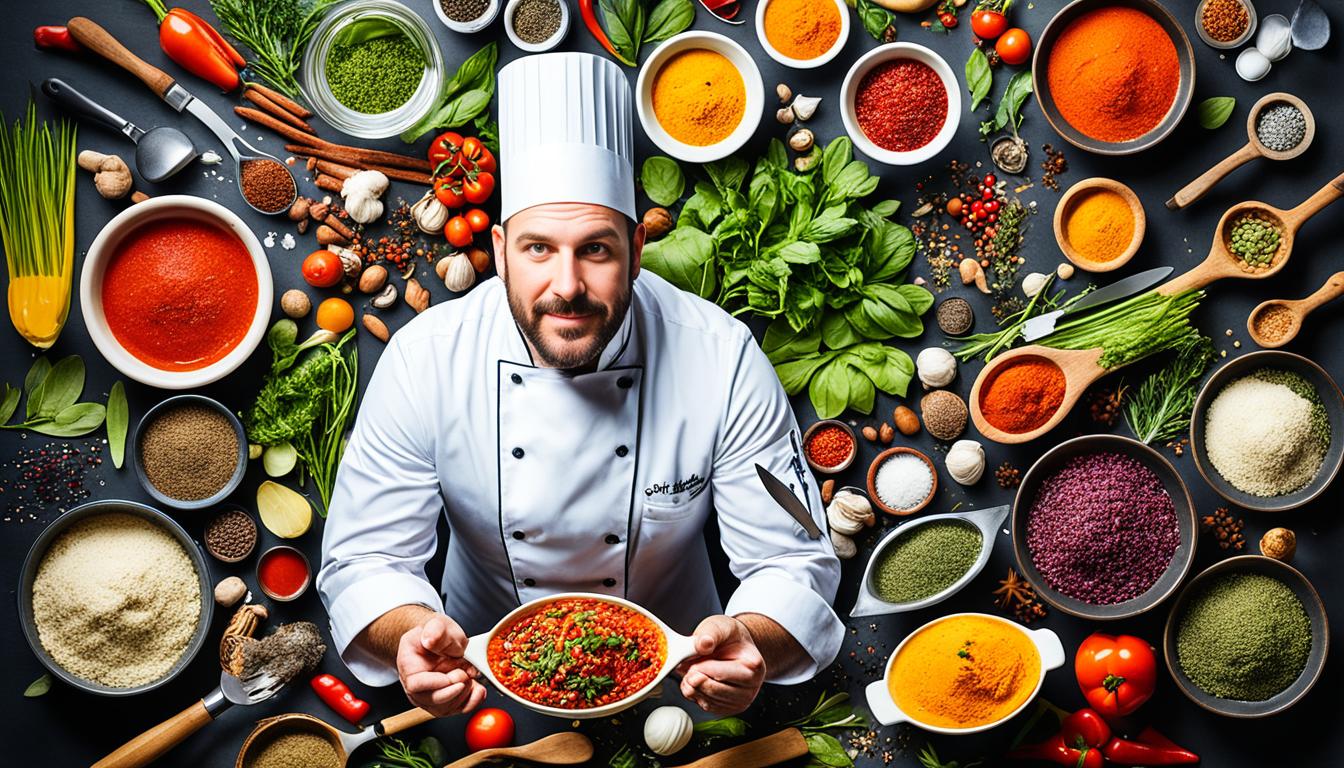
Welcome to our culinary journey! This article will dive into the amazing world of cooking. We’ll give you tips and inspiration to boost your kitchen skills. Anyone can join, whether you’re just starting out or you could teach a cooking class.
We’ll start with the basics and move on to new flavors. You’ll boost your knife work, learn new ways to cook, and learn to make your dishes look appealing. We’ll even travel the world through food, showing you how to make meals from different cultures.
And there’s more! We’ll cover cooking for special diets and making meals that won’t break the bank. We want to inspire you to be daring in the kitchen. With our help, you can turn any recipe into a work of art.
So, put on your apron and let’s discover the joy in cooking. There’s a world of tastes, skills, and creations waiting for you!
Key Takeaways:
- Discover valuable tips and creative inspiration to enhance your culinary skills
- Master essential cooking skills and explore various cooking techniques
- Learn about flavor profiles and how to elevate your dishes with spices, herbs, and seasonings
- Improve your knife skills and make your cooking more efficient and professional
- Expand your culinary repertoire with creative cooking techniques
The Basics of Cooking
Before you start with tricky recipes, you should learn basic cooking techniques. This will help you enjoy your cooking journey more and be successful in the kitchen. We will introduce you to essential cooking skills and techniques.
1. Knife Skills
Knife skills are a must for all cooks. Learning to handle knives properly makes you work faster and safer. Start with basics like chopping, slicing, and dicing. Getting a good chef’s knife and keeping it sharp will make cutting easy.
2. Understanding Heat Control
It’s important to control heat for well-cooked dishes. Each cooking method needs a certain heat, like simmering or broiling. Get to know your stove and oven to see how heat and cooking times change food.
3. Ingredient Preparation
Preparing ingredients well can really improve your dishes. This includes peeling, washing, and measuring ingredients right. Preparing ovens, clarifying butter, and marinating meats also helps. These steps are vital for cooking success.
4. Seasoning and Flavoring
Seasoning and flavoring make your dishes stand out. Try using different spices, herbs, or seasonings to make food taste better. Knowing when and how to add seasoning is key. This helps balance flavors for an enjoyable meal.
5. Cooking Techniques
Learning different cooking methods lets you cook a variety of meals. Try sautéing, braising, grilling, and more. Each method brings unique taste and texture to your dishes.
By learning these skills, you’re on your way to becoming a great cook. Cooking is a journey, so keep practicing. With commitment and creativity, you can become an excellent cook. So, start cooking and enjoy the process!
| Essential Cooking Skills | Cooking Techniques |
|---|---|
| Knife Skills | Sautéing |
| Heat Control | Braising |
| Ingredient Preparation | Roasting |
| Seasoning and Flavoring | Grilling |
| Boiling |
Exploring Flavor Profiles
Understanding flavor profiles is crucial for making tasty and balanced meals. We’ll look at various spices, herbs, and seasonings here. You’ll learn to mix them up for truly delicious dishes.
It’s vital to know each spice, herb, and seasoning’s unique taste. This knowledge helps make your dishes amazing. Let’s dive into some popular ingredients:
Cinnamon: It has a warm, sweet taste. Great for swee and savory dishes, like in oatmeal or a stew.
Garlic: A food essential, it adds savory depth. Perfect for sautéing veggies or making marinades.
Rosemary: Known for its bold, pine-like taste. It’s ideal on meats and in bread for added flavor.
Try mixing different spices, herbs, and seasonings. This experiment can really improve your cooking. Know your ingredients well to impress anyone with your dishes.
Creating Flavorful Combinations
Blending flavors well is a real skill. Here are some pairing ideas to make your meals stand out:
- Combining citrus with thyme or basil brightens grilled foods.
- Cumin and paprika make a rich, smoky flavor for chili or barbecue.
- Try global spice blends like garam masala for exciting new tastes.
Be bold and try new spice or herb combinations. Trust your senses to find great flavors.
A Visual Guide to Flavor Profiles
| Ingredient | Flavor Profile | Common Uses |
|---|---|---|
| Cinnamon | Warm, Sweet | Oatmeal, Stews, Baked Goods |
| Garlic | Savory, Aromatic | Sauces, Marinades, Stir-Fries |
| Rosemary | Bold, Pine-like | Roasted Meats, Potatoes, Breads |
| Lemon | Bright, Tangy | Seafood, Salad Dressings, Roasted Vegetables |
| Paprika | Smoky, Earthy | Barbecue, Soups, Stews |
Each ingredient brings a special taste to dishes, as shown in the table. Let these examples inspire you to be creative with your cooking.
You now know a lot more about flavors and how to use them. Get ready to cook something exciting and delicious!
Mastering Knife Skills
Knife skills are key for anyone who loves cooking. They make a big difference, whether you’re in culinary school, cooking at home, or just love being in the kitchen. Proper chopping, slicing, and dicing boost your skills and make you more professional.
The Art of Chopping, Slicing, and Dicing
Chopping, slicing, and dicing lay the base for many dishes. They not only make your food look good but also change how the ingredients feel and taste.
Here are tips to get better at using a knife:
- Hold the knife correctly: Hold the handle tight with your fingers. Your thumb and index finger should be on the blade for more control.
- Keep a steady hand: Grip the knife well and keep your hand still. This ensures your cuts are even and avoids accidents.
- Use a sharp knife: A sharp knife cuts better. Sharpen it often and use a knife sharpener before cutting.
- Master knife techniques: Learn and practice different cuts like julienne, chiffonade, and brunoise to get better.
- Choose the right cutting board: Pick a solid cutting board. It gives you a stable place to cut safely and well.
Enhancing Efficiency in the Kitchen
Getting good with a knife makes meals look better and you work faster. With the right cuts, you’ll save time and energy when cooking.
Tips for when you’re cutting food:
- Plan your cuts: Think about the size and shape you need for each ingredient first. This makes everything go smoother and faster.
- Maintain a rhythm: Cut at a steady pace for even slices. It makes your cooking look more professional.
- Utilize proper techniques: Use the right knife moves for each food. Rock your knife for herbs and slice big veggies back and forth.
- Be mindful of safety: Be very careful with knives. Keep your fingers away from the sharp edge to stay safe.
Unleash Your Culinary Potential
Getting better at knife work opens up amazing cooking opportunities. Mastering chopping and slicing lets you make dishes that look and taste great. It makes cooking more fun and exciting.
Keep learning with us. Next, we’ll dive into advanced cooking techniques!
Creative Cooking Techniques
Enhance your cooking skills with creative techniques like braising, grilling, and sautéing. Mix in methods such as stewing to surprise your guests. These ways of cooking add depth and unique tastes to your meals.
Braising
Braising turns tough meat cuts into something juicy and tender. You cook the meat slowly in a little liquid, such as broth or wine, over low heat. This method makes the meat soft and packed with flavor. Beef short ribs or pot roast cooked this way make a satisfying dish.
Grilling
Grilling gives your food a smoky and charred flavor. Try marinated steaks, burgers, kebabs, or even grilled peaches. The direct heat of the grill enhances their taste, pleasing your palate.
Sautéing
Sautéing is fast and flexible, great for cooking over high heat. It browns and caramelizes food, adding a rich taste. Sauté veggies or make shrimp scampi for a tasty, quick meal.
Stewing
Stewing is simmering ingredients, such as meat and veggies, over time. It makes tough meat tender and flavors deep. A beef stew or a warm vegetable stew is perfect for cold days.
Now try out these cooking techniques. Mix different flavors, ingredients, and cooking times to make your own dishes. Whether it’s braising, grilling, sautéing, or stewing, these methods will improve your cooking.
| Technique | Description |
|---|---|
| Braising | Cooking meat slowly in liquid to enhance tenderness and flavor. |
| Grilling | Cooking food over an open flame or hot grill grates for smoky flavors. |
| Sautéing | Cooking ingredients quickly in a small amount of oil or fat over high heat for caramelization. |
| Stewing | Simmering ingredients, often meat and vegetables, in liquid for an extended period to create rich and tender dishes. |
The Art of Presentation
In the culinary world, they say we eat with our eyes first. It’s true. How a dish looks is as important as its taste. We will look into how to make your dishes look as good as they taste. This section will share plating and garnishing tips to make your meals memorable.
The Power of Food Presentation
Food presentation is more than putting food on a plate. It means making an attractive arrangement. This showcase brings out the best in flavors, textures, and colors. A well-presented dish turns a good meal into a great one.
When plating, think about how the elements work together visually. Play with colors and shapes to make dishes pop. Adding fresh herbs and colorful veggies brings life to the plate.
“Food presentation allows us to express our creativity and showcase our culinary skills. It’s the finishing touch that can make a simple dish look gourmet and enticing.”
Plating Techniques
Different types of cuisines need different plating styles for the best look. Here are some plating ideas you might like:
- Stacking: Layering components to add height and depth.
- Swipe: Using a sauce as a swipe for decoration.
- Ring Molding: Putting ingredients in a ring mold for a neat look.
- Freeform: Arranging the meal artistically without strict rules.
Each of these techniques has a specific role in visual appeal. They help draw attention to different parts of the dish.
Garnishing with Flair
Garnishes are like the cherry on top. They add flavor and elegance to a plate. It can be simple, like a few herbs, or complex, like edible art.
When garnishing, think about what complements the dish’s flavors. Herbs, flowers, and zest can brighten savory dishes. For desserts, think of sugar dust, chocolate drizzle, or a cream dollop.
The Importance of Attention to Detail
Detail is key to perfect plating and garnishing. Everything should look and taste exceptional. Start with the best ingredients and handle them with care.
Good presentation makes eating an experience. It delights the eyes and entices the taste buds. Presentation is as important as the dish itself.
Exploring Regional Cuisines
Step outside of your comfort zone and go on a culinary adventure. We’ll dive into the world of regional cuisines. You’ll find familiar flavors and discover exciting and new tastes. It’s a great way to understand diverse cultures.
Exploring international cooking means trying dishes from around the globe. Each region offers its own special dishes. These recipes are a mix of local ingredients, cooking methods, and traditions.
Our journey begins with the vibrant Mediterranean cuisine. It focuses on fresh foods like olive oil, fruits, veggies, and seafood. Enjoy dishes like Greek moussaka or Italian bruschetta. They’ll make you feel like you’re dining by the Mediterranean Sea.
Next, let’s explore the flavors of Asia. You can try Indian curries with their fiery spices. Or taste the delicate sushi from Japan. Asian food is a mix of incredible flavors. Try Chinese stir-fries, Thai curries, or Vietnamese pho. They’ll take your taste buds on an adventure.
It’s also important to understand the meaning behind these dishes. They represent more than just food. They are a reflection of a community’s history and values. By trying these meals, we get to know a culture better.

Join us in celebrating the world’s diverse regional cuisines. Let’s get inspired to cook different dishes at home. This way, we can share in the joy of food from around the world. Together, we’ll enjoy the art of cooking and the happiness it brings us.
Table of Regional Cuisines
| Region | Cuisine | Signature Dishes |
|---|---|---|
| Asia | Chinese Cuisine | Dumplings, Kung Pao Chicken, Peking Duck |
| Europe | Italian Cuisine | Pizza, Pasta, Tiramisu |
| Middle East | Lebanese Cuisine | Hummus, Falafel, Shawarma |
| Africa | Moroccan Cuisine | Couscous, Tagine, Pastilla |
| Americas | Mexican Cuisine | Tacos, Guacamole, Enchiladas |
Cooking for Special Diets
Today’s food scene is more varied than ever. It’s important to offer choices for different diets. At our [Company Name], we think everyone should enjoy tasty meals that fit their dietary needs. We’ll talk about various diets, like vegan cooking and gluten-free recipes. We’ll give you yummy recipes and tips on how to adjust meals for various dietary needs.
Vegan Cooking
Veganism is becoming popular. It’s a diet that shuns animal products like meat, dairy, and eggs and loves veggies, fruits, and grains. Whether you’re a vegan or just curious, we have tasty recipes for you. Our dishes celebrate the joys of plant-based eating.
“A vegan diet is not just about salads. It’s an opportunity to explore creative combinations of ingredients and flavors, showcasing the incredible versatility of plant-based cooking.” – [Chef Name]
Our vegan recipes range from hearty stews to fresh salads. They’re great for dinner any night or for entertaining. They’re so good, they’ll please everyone, vegan or not.
Gluten-Free Recipes
For those with celiac or gluten issues, eating gluten-free is a must. Gluten is in wheat, barley, and rye. It can be hard on some people’s tummies. We’ve designed diverse, delicious recipes for you. They make eating gluten-free fun and flavorful.
“Gluten-free cooking doesn’t have to be bland or restrictive. By exploring alternative grains, flours, and ingredients, you can create delicious gluten-free meals that are just as satisfying as their gluten-filled counterparts.” – [Chef Name]
Expect pasta, breads, and even snacks in our gluten-free selection. They show how tasty and exciting gluten-free cooking can be. We use unique ingredients, like quinoa and almond flour, to keep things interesting.
Tips for Adapting Recipes
Making recipes fit different diets can be tricky. But with simple tips and swaps, it’s easy. Here’s how:
- Use plant-based milks like almond or oat instead of dairy.
- For baking, try flaxseed or applesauce as egg substitutes.
- For baked goods, try gluten-free flours like rice flour and cornstarch.
- Spice up your dishes with fresh herbs and spices.
- Get imaginative with veggie-based options rather than meat, such as jackfruit and tofu.
Making food for special diets can still be tasty and exciting. Just be creative and choose your ingredients wisely. You’ll have dishes that everyone can enjoy.
| Special Diet | Description |
|---|---|
| Vegan | A diet that skips all animal products in favor of plants. |
| Gluten-Free | A diet that avoids gluten found in wheat, barley, and rye. |
| Ketogenic | A diet that’s high in fats, low in carbs to spur fat burning. |
Next, we’ll talk about how to cook great meals without spending a lot. We’ll share tips and recipes to help you enjoy eating on a budget.
Cooking on a Budget
Cooking tasty meals can be affordable. Tasty Bites believes everyone should enjoy good food. We offer tips to save money on delicious meals.
Meal Planning
Meal planning saves money. Plan your meals ahead to avoid buying what you don’t need. Create a meal plan that fits your tastes and uses what you have. Make a shopping list to only buy what’s necessary, avoiding impulse buys.
Affordable Ingredients
Choosing affordable ingredients is key. Go for basics like rice, pasta, and beans as they are cheap and versatile. Seasonal fruits and veggies are also budget-friendly and nutritious. They add flavor to your meals without the high cost.
Smart Shopping Strategies
Smart shopping stretches your budget. Shop at farmers’ markets for cheaper, fresh produce. Watch for deals at the grocery store and join loyalty programs. Buy non-perishables in bulk to save money over time.
Affordable Recipes
Look for recipes that are easy on the wallet but tasty. There’s a wide range of affordable meals. Soups, stews, and casseroles are filling and inexpensive. Check out our recipe suggestions for budget-friendly cooking:
| Recipe | Ingredients | Cost |
|---|---|---|
| Lentil Curry | Lentils, onion, garlic, canned tomatoes, spices | $5 |
| Veggie Stir-Fry | Assorted vegetables, soy sauce, garlic, ginger | $7 |
| Bean and Vegetable Soup | Canned beans, carrots, celery, onion, vegetable broth | $6 |
These recipes are both cheap and tasty. You can adjust them to your liking. This way, you don’t sacrifice taste or creativity when cooking on a budget.
By planning, shopping wisely, and using budget recipes, you can enjoy great meals for less. So, start cooking cost-friendly meals and enjoy your food savings!
Embracing Culinary Creativity
Cooking means more than just following recipes. It’s a chance to be creative. At [Brand Name], we think being creative in the kitchen is like adding spice. It makes every meal tastier. By trying new recipes and changing them up, you can make cooking exciting. You’ll create dishes that show who you are.
Think about adding special touches to your favorite foods. For example, you might sprinkle cinnamon on mac and cheese. Or, put a little hot sauce in your chocolate cake. These changes can turn regular foods into something amazing. Your loved ones will love your unique cooking.
Don’t hesitate to try new tastes and methods. You could add miso paste to your salad. Or, put coconut milk in your curry. Mixing different styles of cooking broadens your food horizon. It also makes your food much more interesting.
“Creativity is allowing yourself to make mistakes. Art is knowing which ones to keep.” – Scott Adams
Working on new recipes can also meet different dietary needs. Whether you eat vegan, gluten-free, or need low-sodium foods, you can still eat great meals. Just adjust the recipes to fit your diet. This way, you won’t miss out on delicious flavors.
Customizing Dishes: Tips & Tricks
Want to start getting creative in your kitchen? Here are some tips:
- Note your top flavors and ingredients, and find new recipes to use them in.
- Substitute ingredients. For instance, swap chicken in a recipe with tofu or mushrooms.
- Spice things up with herbs. Mix basil with berries or cardamom with citrus for a taste explosion.
- Add crunch. Sprinkle some nuts or toss in some crisp veggies for extra texture.
- Turn leftovers into something new. Make pasta into a frittata or use veggies on a fresh pizza.
Culinary creativity is an adventure. It’s about trying new things and letting your senses lead the way. So, get your apron. Put on your chef’s hat. Let your kitchen be a place where you imagine and create wonderous dishes!

Conclusion
We’ve covered a wide range of cooking topics in this article. From basic skills to advanced tips, and various flavors to how you present your food. The goal was to give you useful advice and fuel your love for cooking.
When you know the basics, you’re ready for your kitchen adventures. You could try new cooking styles, discover foods from around the world, or cook for special diets. Cooking is a great way to show who you are and to find joy in food.
Let’s enjoy cooking and making every meal special. Together, let’s add our unique flavor, be creative in the kitchen, and spread happiness with every bite. Join us in exploring the wonders of cooking. Your kitchen can be a place of fun, learning, and pure enjoyment.
FAQ
What topics will this article cover?
This article dives into various cooking topics. It includes the basics, different flavors, knife skills, and how to present food well. Also, it talks about cooking for specific diets, recipe creativity, and cooking without breaking the bank.
Why is it important to understand the basics of cooking?
Knowing cooking basics is key. It sets you up for complex recipes. It helps you gain essential skills. This makes you feel more at ease in the kitchen. You’ll get to try different recipes and techniques.
How can I enhance the flavor of my dishes?
To make your food taste better, try new spices and herbs. Mixing these can make your meals stand out.
What are some essential knife skills?
Important knife skills are chopping, slicing, and dicing. Getting better at these will speed up your cooking. It also keeps you safe while cooking.
What are some creative cooking techniques I can try?
You might want to try braising, grilling, or stewing your food. These methods make your meals more varied and interesting.
How can I improve the presentation of my dishes?
Make your food look good by how you plate it and add garnishes. This makes your meals more attractive and fun to eat.
How can I explore different regional cuisines?
Try making traditional dishes from various places. This could mean Italian pizza or Thai curry. It will introduce you to new flavors and cultures.
How can I cook for special diets?
Find out what different diets need and follow recipes that fit. We will offer tips and recipes for vegan and gluten-free meals.
How can I cook delicious meals on a budget?
To cook well on a budget, plan your meals and shop smart. We’ll give you advice and recipes that are both tasty and affordable.
How can I add my personal touch to recipes?
Personalizing recipes is all about being creative. We encourage you to modify recipes to your liking. This will help you find your own style in the kitchen.
What is the purpose of this article?
The goal is to offer tips and inspiration to boost your cooking skills. Our aim is for you to enjoy cooking and start a journey in the kitchen.