
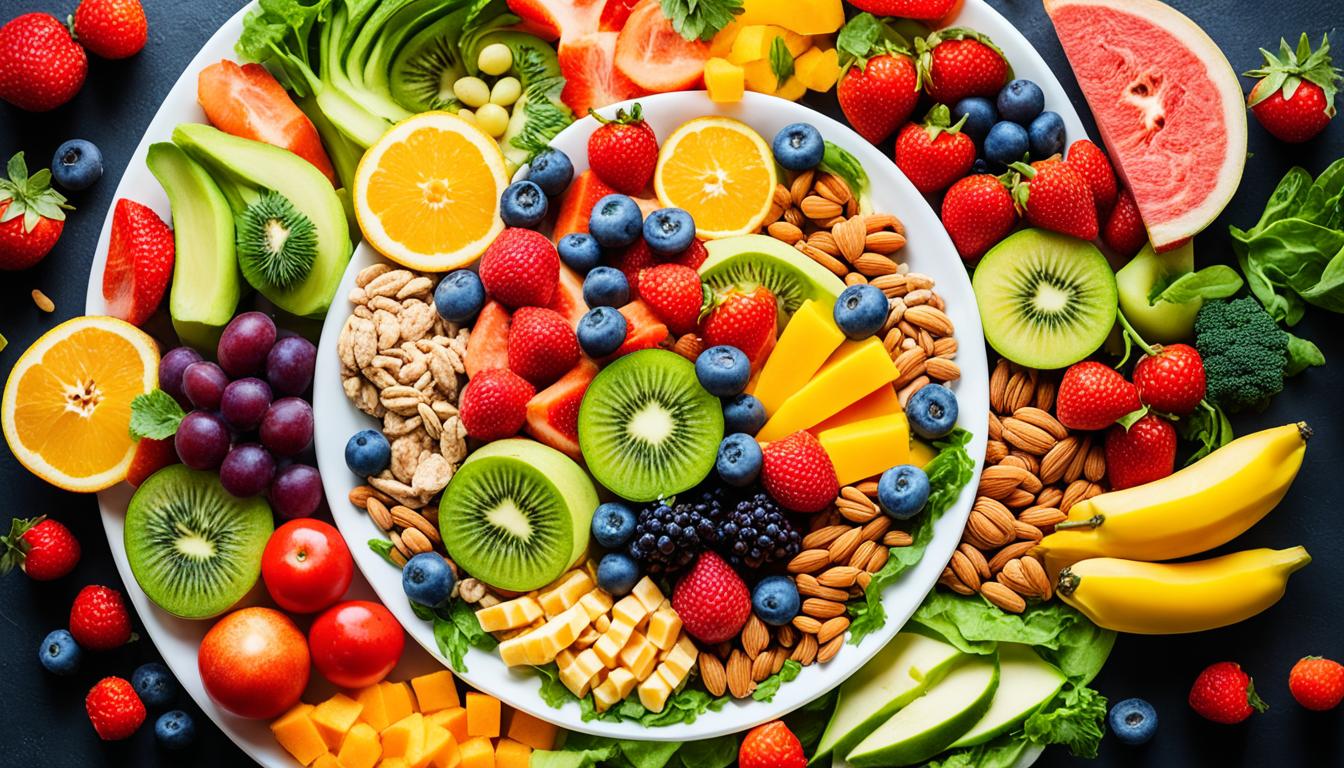
Nutrition is key to living healthy. What we eat affects us greatly, inside and out. By choosing our food wisely, we can achieve great health.
This article is all about the power of nutrition. It will help you understand basic nutrition and pick the best diets for you. You’ll learn to make smart diet choices.
Key Takeaways:
- Nutrition plays a vital role in our overall health and well-being.
- Smart nutrition choices can reduce the risk of chronic diseases.
- Choosing the right diet based on your goals is crucial.
- Superfoods are packed with essential nutrients that boost health.
- Supplements can be a valuable addition to your nutrition plan.
The Basics of Nutrition
Before diving into how to transform our health, let’s look at the basics of nutrition. Knowing these core facts helps us make smart diet choices. It unlocks the power of eating well.
Macronutrients and Micronutrients
Food is divided into macronutrients and micronutrients. Macronutrients offer energy and help our body work. They include carbs, proteins, and fats.
Carbohydrates give us energy. They’re in grains, fruits, and veggies. Whole grains and a mix of fruits and veggies provide the best carb types.
Proteins help our body grow and stay healthy. Look for proteins in meats, fish, beans, and dairy. Mix up these foods to meet your protein needs.
Fats are crucial for our health. Pick healthy fats like avocados and olive oil. Avoid too much saturated fat from processed foods.
Micronutrients are vitamins and minerals we need in small doses. They’re vital to our overall health. Eating a variety of foods ensures we get all these micronutrients.
Understanding Nutrient Density
Nutrient density focuses on food’s nutrients compared to the calories they have. Foods like fruits, vegetables, and lean meats are nutrient-dense. They’re rich in what we need but low in calories.
On the flip side, some foods are high in calories but low in good nutrients. These include sugary drinks and fried snacks. We should eat them less often.
Putting It All Together: Building a Balanced Plate
Now, let’s apply what we have learned to our meals. A balanced plate has all the macronutrients and many micronutrients. This ensures we eat what our body needs.
| Macronutrient | Food Sources |
|---|---|
| Carbohydrates | Whole grains, fruits, vegetables |
| Proteins | Lean meats, poultry, fish, legumes, dairy |
| Fats | Avocados, nuts, seeds, olive oil |
Choose unprocessed foods and watch your portions. A balanced plate makes sure you get the nutrients you need. It also helps you feel full and well.
The Role of Nutrition in Disease Prevention
Nutrition is key for staying healthy and preventing diseases. The food we eat gives our body what it needs to stay well. This includes fighting off the risks of heart disease, diabetes, and cancer.
Eating the right food can boost our immune system. Foods packed with vitamins, minerals, and antioxidants do this. They help our bodies fight infections and keep us healthy.
Take vitamin C as an example. It’s great for our immune system. It also helps prevent heart problems by easing inflammation and stress on our blood vessels.
“Good nutrition is not just about eating the right things; it’s also about avoiding harmful substances that can increase the risk of diseases. For example, reducing the intake of processed foods high in unhealthy fats, sodium, and added sugars can help prevent conditions like obesity, heart disease, and diabetes.” – Dr. Karen Ramirez, nutrition specialist
Eating well is also crucial in fighting off diabetes. A diet with lots of whole grains, lean proteins, fruits, and veggies is important. It helps keep your blood sugar levels steady, preventing diabetes Type 2.
A good diet also helps lower your cancer risk. Some foods fight cancer, like broccoli, berries, and legumes. They’re full of cancer-fighting nutrients.

The importance of nutrition in preventing disease can’t be overstated. A balanced diet keeps us healthy. It’s a good idea to talk with a nutrition expert to make sure you’re eating right for good health.
Choosing the Right Diet for Your Goals
It’s challenging to pick a diet from the many available today. At *our website*, we help you find the right one for your needs. Whether you want to lose weight, gain muscle, or just feel better, we’re here to support you.
Choosing the right diet means thinking about what you need and like. Everyone has different nutrition needs and tastes. So, making your eating plan fit you is key to reaching your goals.
Our experts offer many diets for different goals:
- *Keto Diet*: Ideal if you want to lose weight and boost your metabolism. It’s all about eating lots of fats, a good amount of protein, and few carbs.
- *Mediterranean Diet*: Best for your heart, this diet loves whole grains, fruits, veggies, lean meats, and olive oil.
- *Paleo Diet*: It looks back to our ancestors and focuses on fresh foods like meat, fish, fruits, veggies, nuts, and seeds.
- *Vegetarian and Vegan Diets*: For those who choose not to eat meat or animal products, promoting both health and the planet.
Think about what you want and what you can’t eat to find your best diet match. Remember, getting advice from a diet expert can really help with your unique situation.
Eating well is not just a short-term fix; it’s about lifelong good habits. Choosing a diet rich in quality foods gets you on the path to a healthier you. So, start on your nutrition journey today to achieve your dreams.
Testimonial: Transforming My Health Through Nutrition
“I was struggling with my weight and energy until I focused on nutrition. Thanks to *our website*, I found a diet that not only shed pounds but also boosted my brainpower and energy. The right diet changed my life!” -Sarah, *our website* community member
| Diet Name | Key Features |
|---|---|
| Keto Diet | High-fat, moderate-protein, low-carbohydrate foods |
| Mediterranean Diet | Emphasis on whole grains, fruits, vegetables, lean proteins, and healthy fats |
| Paleo Diet | Focus on unprocessed foods like meat, fish, fruits, vegetables, nuts, and seeds |
| Vegetarian and Vegan Diets | Plant-based diets excluding meat and fish |
Superfoods: Fueling your Body with Nutrition Powerhouses
Superfoods are packed with nutrients that boost your health. They offer vitamins, minerals, and antioxidants. These support your body in many ways, leading to a healthier life.
Berries like blueberries and strawberries fight harmful substances in your body. They keep your brain healthy. Leafy greens such as kale and spinach are full of vitamins and minerals, promoting good health.
Chia seeds are great because they have lots of fiber and omega-3s. They help you feel full and contain key nutrients. Salmon is another star, rich in omega-3 fats that are good for the heart.
Quinoa is gluten-free and a great source of protein, fiber, and minerals. For those who don’t eat meat, it’s a perfect choice. Turmeric has curcumin, which fights inflammation powerfully.
Remember, superfoods are part of a balanced diet. They boost the health value of your meals. This leads to better health in the long run.
Try superfoods and see how they change your health for the better. By eating these powerful foods, you’re treating your body to essential nutrients.
Navigating the World of Supplements
Supplements boost a healthy eating plan. They’re helpful for hitting fitness targets or fixing nutrient shortages. They can also tackle health issues. We’ll look at different types of supplements, their perks, and how to pick ones that fit your diet.
Understanding Different Types of Supplements
Supplements come in many forms. Each type offers specific benefits. Here’s a peek at some popular options:
- Vitamins and minerals: These pills or powders fill in diet gaps. They aid overall health, strengthen immunity, and keep your body humming.
- Protein powders: Loved by exercisers, these shakes help muscles heal, grow, and get stronger.
- Omega-3 fatty acids: Good for the brain, heart, and fighting inflammation. They’re usually from fish oil or algae.
- Herbal and botanical supplements: Made from plants, these aids offer diverse health boosts. Think better immunity, less stress, and easier digestion. Turmeric, ginseng, and echinacea are a few favorites.
Choosing High-Quality Supplements
Picking the right supplements is key. Why not follow these tips for a safe and smart choice:
- Choose from known brands that are GMP certified and purity tested.
- Go for products with few unnecessary extras or fake stuff.
- Think about the supplement type. Some nutrients work better in special forms.
- Get advice from pros like healthcare or diet experts before starting new supplements.
- Stick to the dose and don’t up it without expert advice.
Just a reminder: Supplements are extra, not essential. Eating a healthy mix of foods comes first.
The Impact of Nutrition on Mental Health
Smart food choices aren’t just good for our bodies. They also help our minds feel better.
Research shows eating right can improve our mental health. Certain nutrients help our brains work better and keep our mood steady.
Omega-3 fatty acids are one such nutrient. They’re in fish, walnuts, and flaxseeds. These healthy fats fight inflammation, easing depression and anxiety symptoms.
Vitamins and minerals are essential for a sharp mind. B vitamins from grains and veggies boost our energy and mood. They affect how we think and feel.
Eating lots of fruits, veggies, whole grains, and lean meat lowers the chance of feeling down. These foods are packed with what our brains need to stay healthy.
“The gut-brain connection is key. What we eat shapes our gut bacteria, which then affects our mental health. A diet with plenty of fiber, fermented foods, and probiotics is good for our brains too.”
To keep our minds healthy, we need to eat a variety of foods. A well-balanced diet with lots of nutrients is key.
But food is just one part of mental health. It’s also crucial to move, sleep enough, and manage stress.
By considering our whole lifestyle, we can boost our physical and mental health. This leads to a richer, happier life.
Key Nutrients for a Healthy Mind
Some nutrients are especially good for our mental health:
| Nutrient | Sources |
|---|---|
| Omega-3 fatty acids | Fatty fish (salmon, sardines), walnuts, flaxseeds |
| B vitamins | Whole grains, legumes, leafy green vegetables |
| Antioxidants (Vitamin C, Vitamin E) | Citrus fruits, berries, nuts, seeds |
| Probiotics and Prebiotics | Yogurt, sauerkraut, kefir, garlic, onions, bananas |

Adding these foods to your diet helps support a healthy mind. Enjoy the benefits of better mental well-being.
Eating Well on a Budget: Tips for Nutritious and Affordable Meals
Some think that eating healthy costs more, but it can be affordable. By doing a bit of planning and being imaginative, you can make nutritious meals without spending a lot. Here are some easy tips and cheap food options for a healthy diet that won’t break your budget:
1. Plan your meals and make a shopping list
Before you shop, plan what you’ll eat all week. This stops you from buying things you don’t need and helps you choose healthier options. Make a list from your meal plan and stick to it. This stops you from buying what you don’t need and makes sure you have what you do need.
2. Embrace seasonal produce
Fruits and veggies in season are tastier and often cheaper. You can find them at a local market or the grocery store. Adding these to your meals helps you save money and get different nutrients.
3. Buy in bulk
Buying grains, beans, nuts, and seeds in bulk saves a lot of money. Check out wholesale stores or the bulk section of supermarkets. Keep them fresh and enjoy healthy foods for less.
4. Cook in batches and meal prep
Cooking more at once and portioning meals saves both time and money. Make big batches of foods like grains and soups. Portion them into containers and keep them in the fridge or freezer for quick, healthy meals. This stops you from buying expensive takeout or unhealthy foods.
5. Opt for cheaper protein sources
Protein is important, but it doesn’t have to be costly. Choose from options like canned tuna, eggs, chicken thighs, tofu, lentils, and chickpeas. These foods are nutritious and budget-friendly for your protein needs.
6. Make use of leftovers
Don’t throw away leftovers. Use them in new meals. For instance, make a frittata with last night’s roasted vegetables or a salad with leftover chicken. This trick helps you enjoy great meals, reduce waste, and save money.
Following these strategies enables you to eat nutritiously on a budget. Your health can thrive without big expenses. With a bit of foresight and creativity, you can feed both your body and your bank account well.
Eating well on a budget is doable and empowering. With easy tips, you can choose wisely within your budget. So, step into a healthier lifestyle without the stress of money.
Conclusion
Nutrition plays a key role in keeping us healthy and well. By choosing our meals wisely, we can lower disease risks, boost our mental health, and meet our wellness goals.
Even small changes in what we eat can have big benefits. Including plenty of nutrient-rich foods in our diet helps our body get what it needs. That means a better immune system, stronger body, and sharper mind.
Remember, everyone’s food needs are different. Age, gender, how active we are, and our health all play a part. Talking to a doctor or dietitian can help us figure out what’s best for us.
Jumpstart your health journey today by focusing on nutrition. With the right food, your body can thrive, leading to a happier, more energetic life.
FAQ
What is the impact of nutrition on overall health?
Nutrition affects how we feel both physically and mentally. By choosing what we eat wisely, we can feel our best.
What are the basics of nutrition?
Knowing about big and small nutrients helps us eat well. Start here to learn the basics of nutrition.
How does nutrition contribute to disease prevention?
Some foods make our bodies stronger against diseases. They lower the chance of getting serious illnesses. Find out how this works.
How do I choose the right diet for my goals?
It’s tough to pick from so many diets. For weight loss, building muscle, or just being healthy, this guide can help.
What are superfoods and how do they benefit my nutrition?
Superfoods are rich in what our bodies need. They bring many health rewards. Learn about the best superfoods for you.
How do I navigate the world of supplements?
Adding supplements can boost your eating plan. This part tells you about supplements, their perks, and picking the best ones.
How does nutrition impact mental health?
What you eat affects how you feel. Good foods help your brain work better, keep you happy, and lower the risk of mental issues.
How can I eat well on a budget?
Eating right doesn’t have to cost a lot. You’ll learn the best ways to eat healthy without spending too much money.
How important is nutrition for overall health?
Nutrition is key for good health. Choose your foods wisely to dodge diseases and reach your wellness dreams.